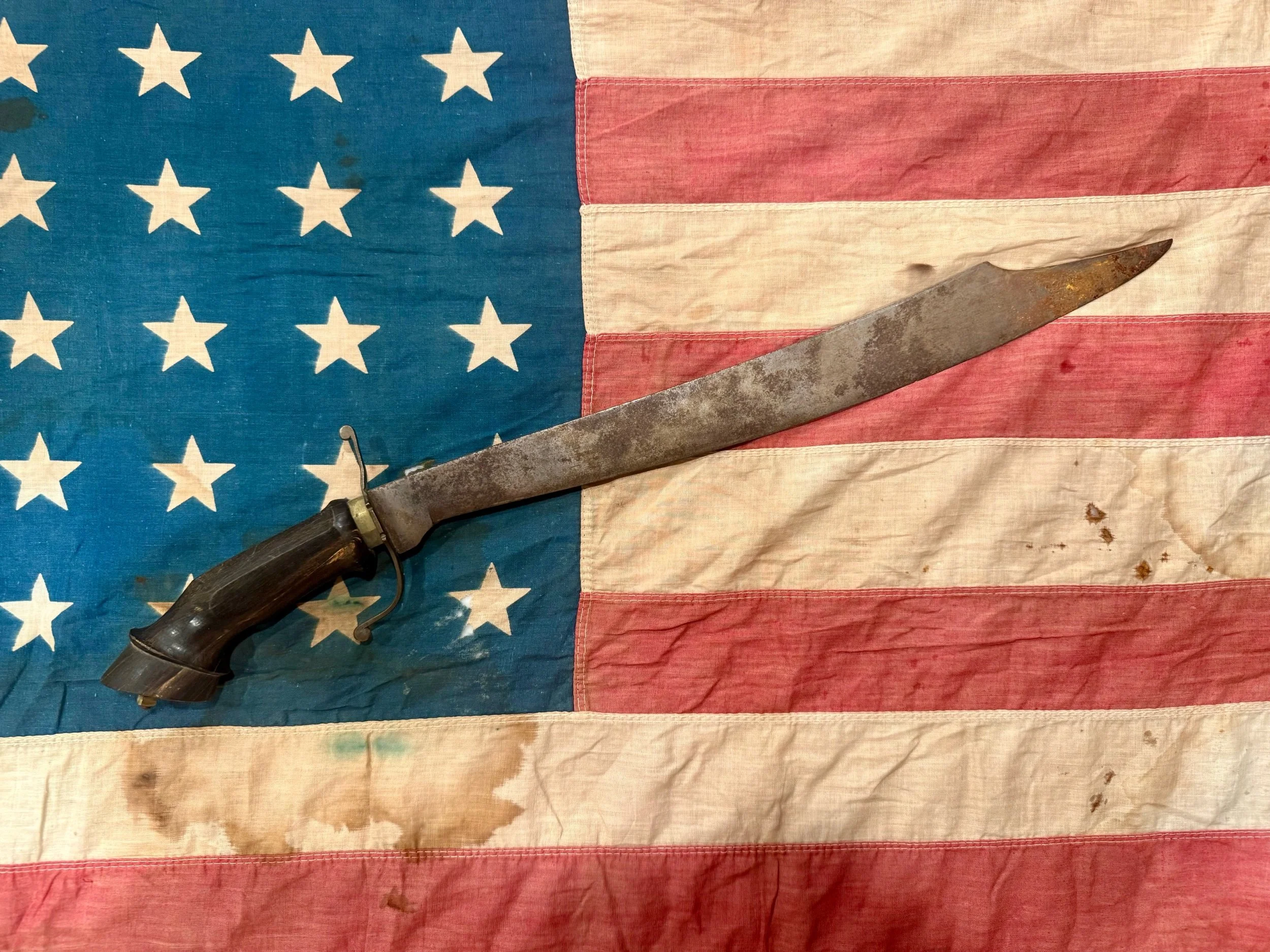
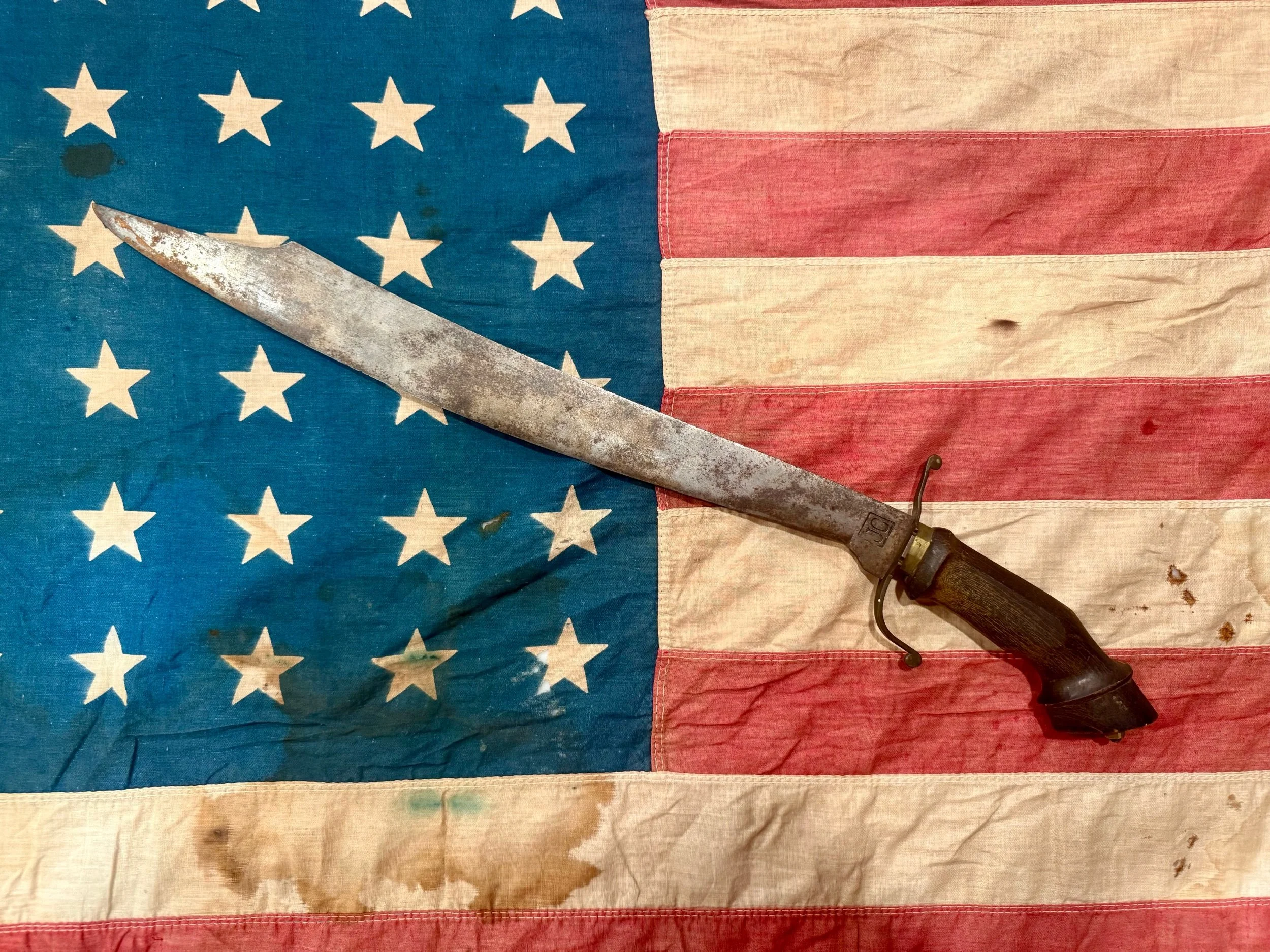
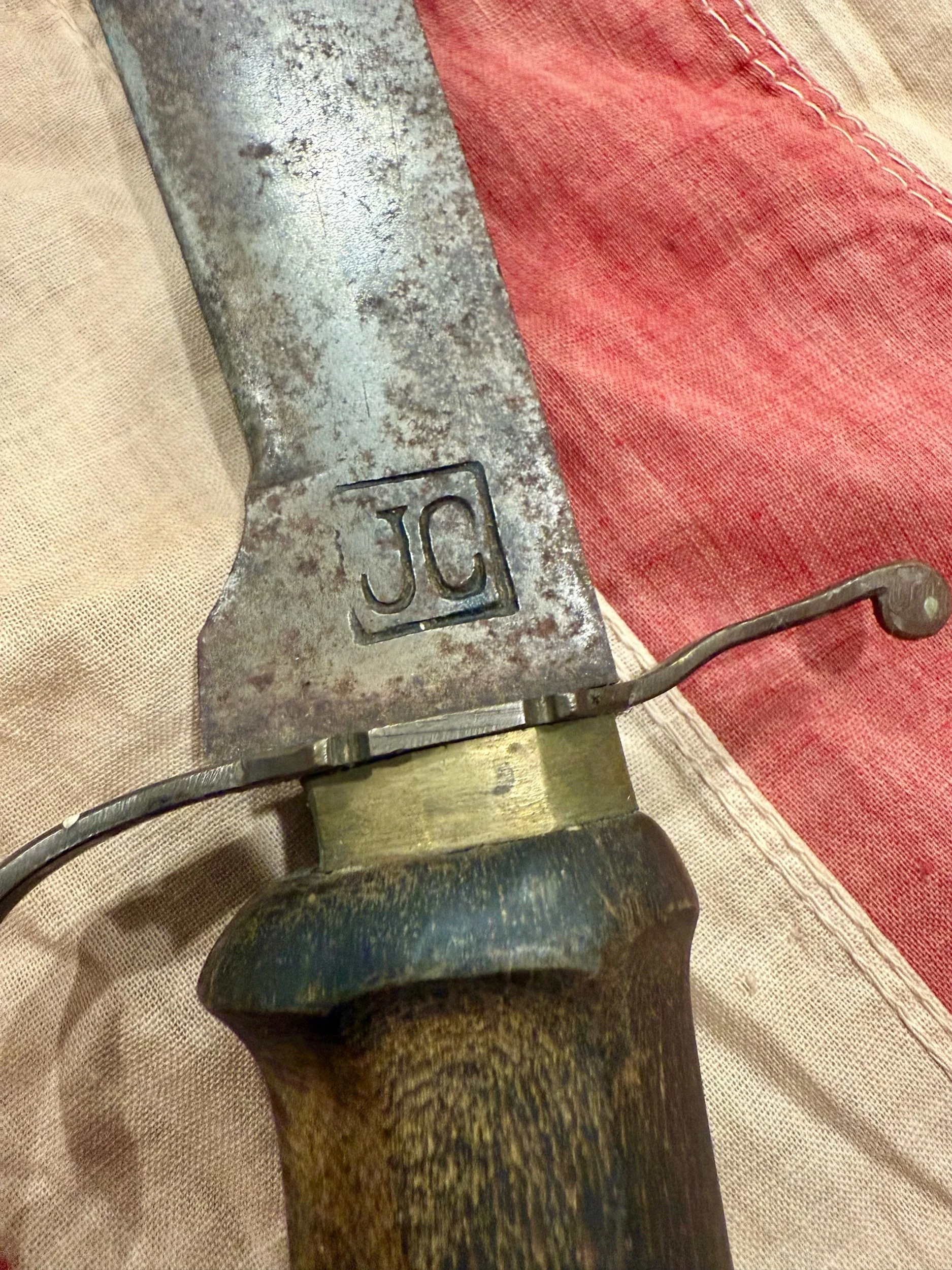
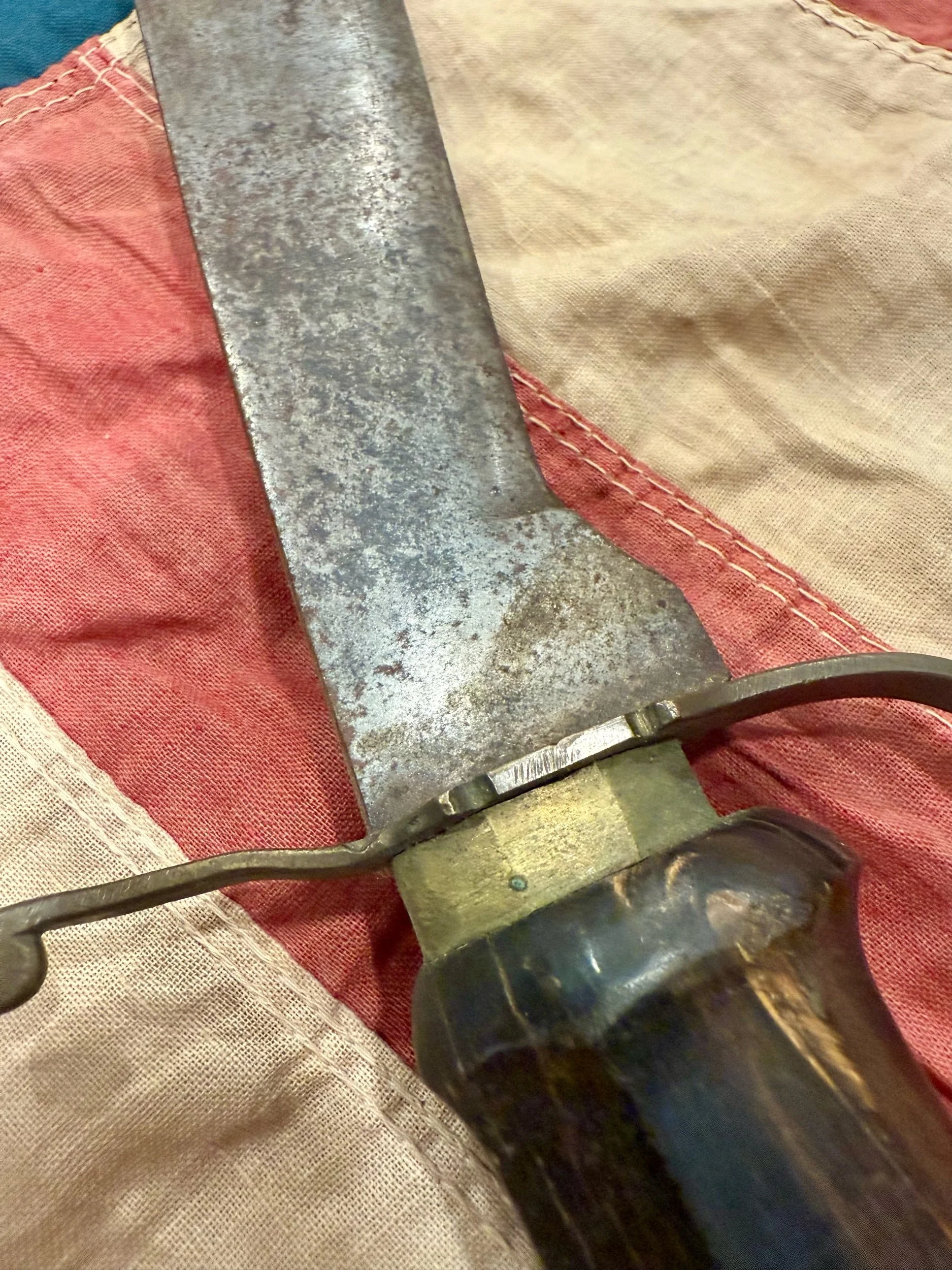
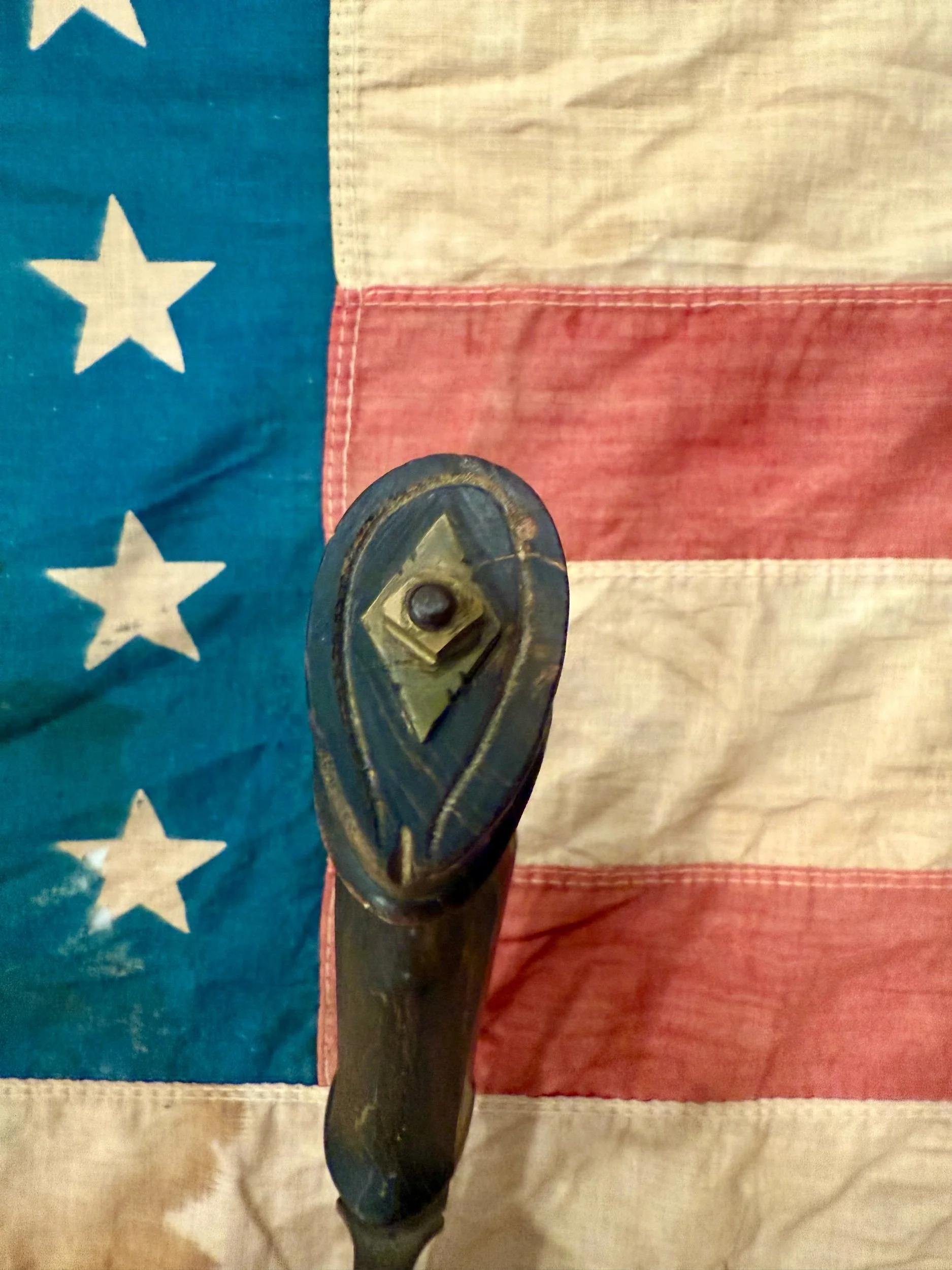
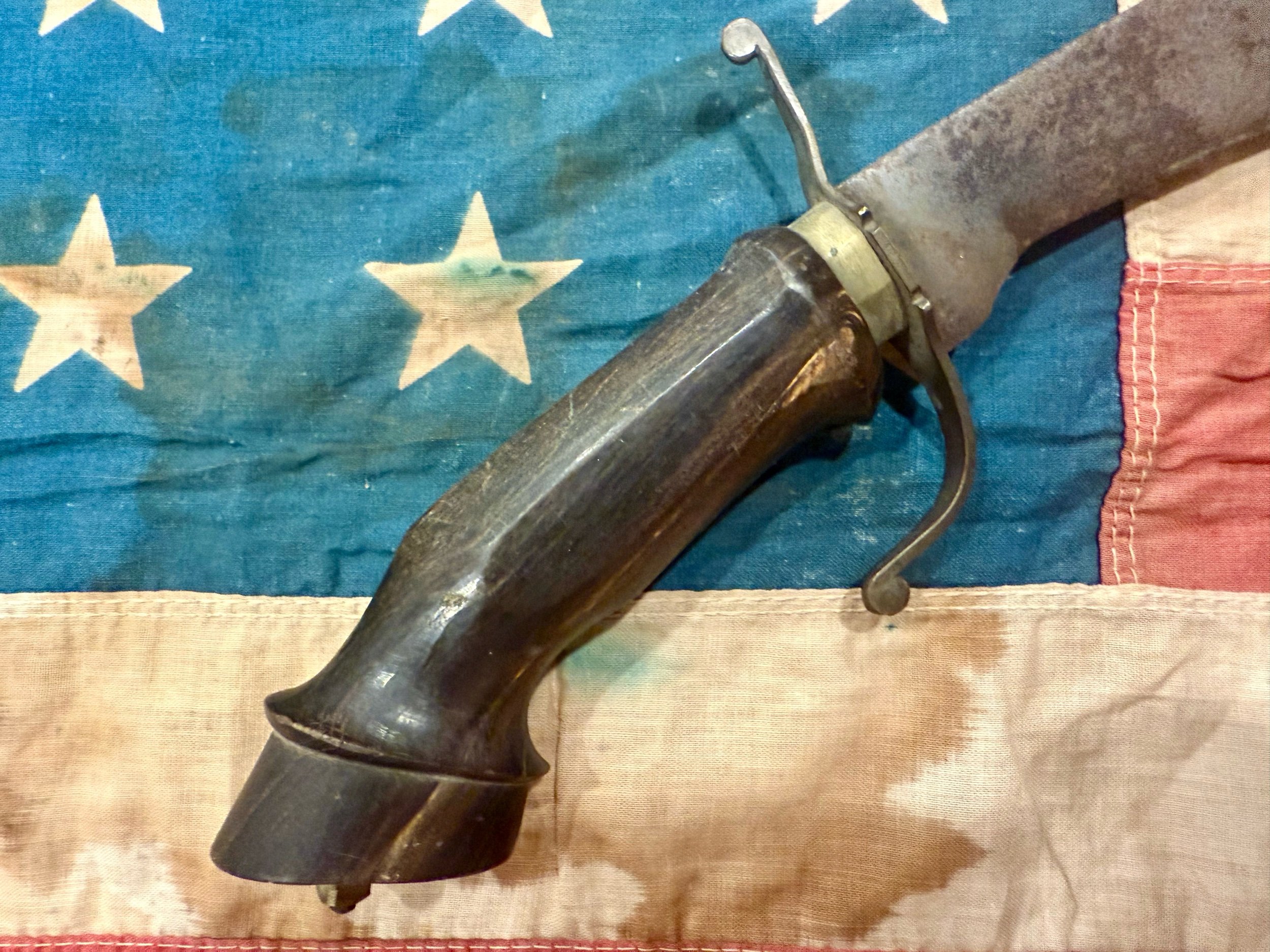
This authentic Negrito Filipino bolo knife is a powerful survivor from the late 19th to early 20th century—a period when blades like this were more than tools; they were lifelines, weapons, and emblems of identity. Forged in an era shaped by pre-colonial warfare, indigenous mythology, and Southeast Asian blade traditions, this bolo reflects a culture where craftsmanship, survival, and resistance were inseparable.
Characterized by its heavy, forward-curved blade, the bolo was originally a utilitarian implement used for farming, clearing land, and woodcutting. Over time, it evolved into a formidable weapon, carried by warriors and revolutionaries alike. Among its most famous users were members of the Katipunan, who wielded bolos in their struggle against colonial rule, and later by Filipino fighters during the World War II.
To the common people of the Philippines, the bolo symbolized labor, resilience, and defiance. It bridged the worlds of the everyday and the sacred—used in battle, rituals, and as a marker of status—embodying a deep connection to land, ancestry, and national pride. Its form and function echo centuries of indigenous innovation influenced by broader Southeast Asian blade culture.
Today, this antique bolo stands as both a deadly weapon of history and a profound cultural artifact. Whether displayed as a collector’s centerpiece or preserved as a tangible link to Filipino heritage, it represents the enduring spirit of a people who transformed a simple farm tool into a symbol of rebellion and identity.
This authentic Negrito Filipino bolo knife is a powerful survivor from the late 19th to early 20th century—a period when blades like this were more than tools; they were lifelines, weapons, and emblems of identity. Forged in an era shaped by pre-colonial warfare, indigenous mythology, and Southeast Asian blade traditions, this bolo reflects a culture where craftsmanship, survival, and resistance were inseparable.
Characterized by its heavy, forward-curved blade, the bolo was originally a utilitarian implement used for farming, clearing land, and woodcutting. Over time, it evolved into a formidable weapon, carried by warriors and revolutionaries alike. Among its most famous users were members of the Katipunan, who wielded bolos in their struggle against colonial rule, and later by Filipino fighters during the World War II.
To the common people of the Philippines, the bolo symbolized labor, resilience, and defiance. It bridged the worlds of the everyday and the sacred—used in battle, rituals, and as a marker of status—embodying a deep connection to land, ancestry, and national pride. Its form and function echo centuries of indigenous innovation influenced by broader Southeast Asian blade culture.
Today, this antique bolo stands as both a deadly weapon of history and a profound cultural artifact. Whether displayed as a collector’s centerpiece or preserved as a tangible link to Filipino heritage, it represents the enduring spirit of a people who transformed a simple farm tool into a symbol of rebellion and identity.