U.S. Naval Academy Parade Jacket and Grouping of Col. William D. Alexander, Son of Maj. Gen. Robert Alexander, WWI Gas Casualty & WWII Aleutian
COL. WILLIAM DENNISON ALEXANDER (1893–1978)**
World War I & II Veteran • Purple Heart Recipient • Multi-Generation Military Legacy
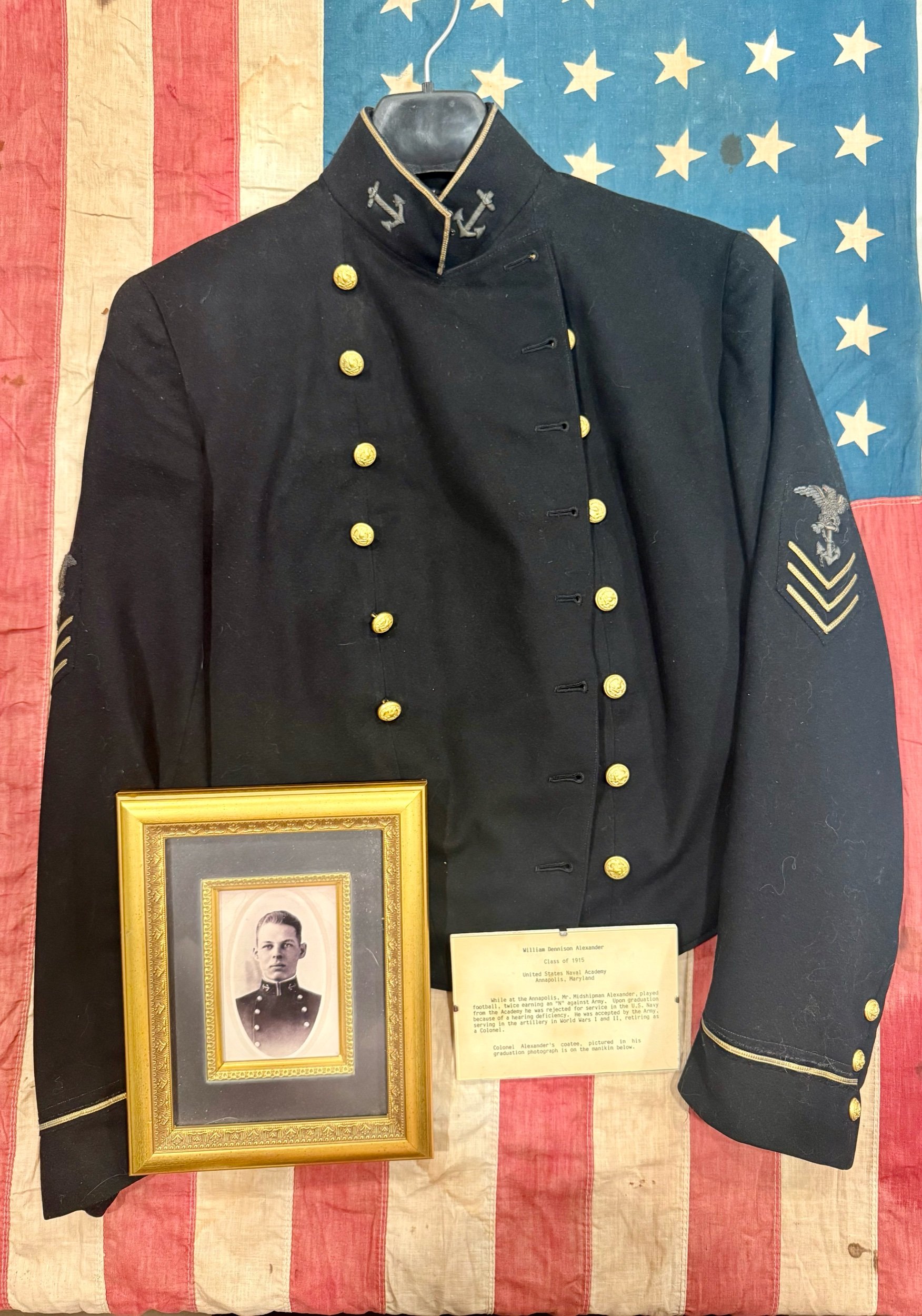
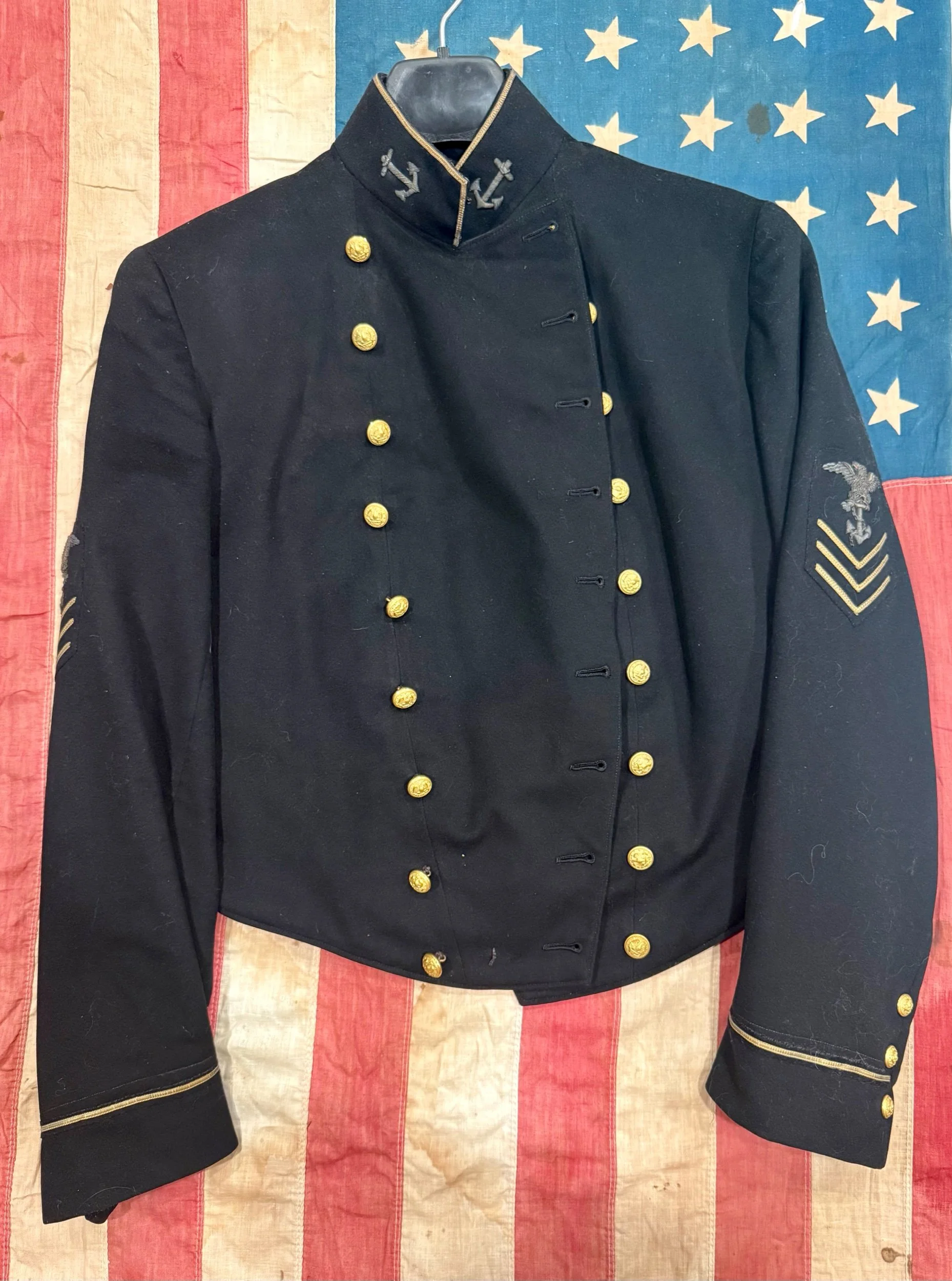
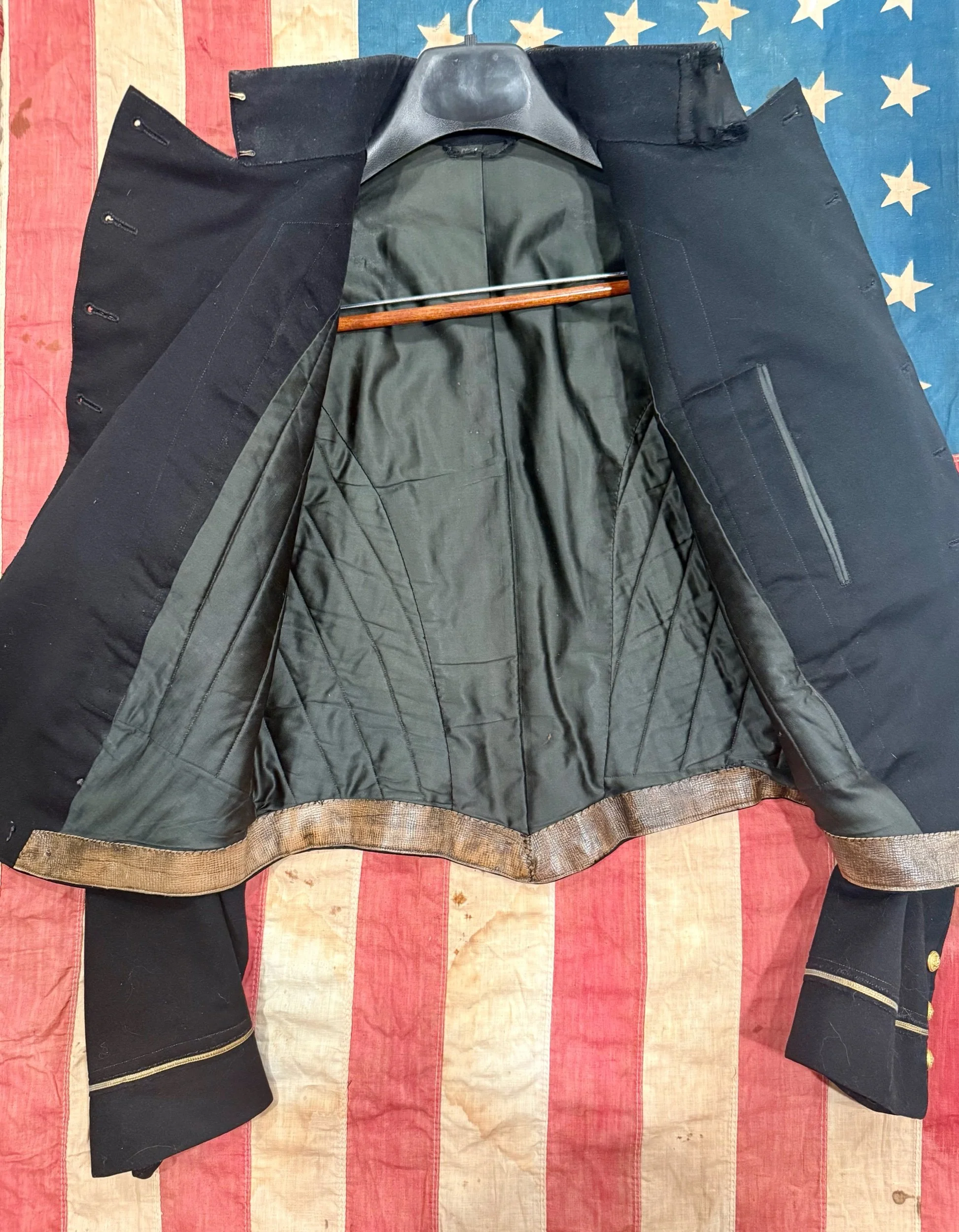
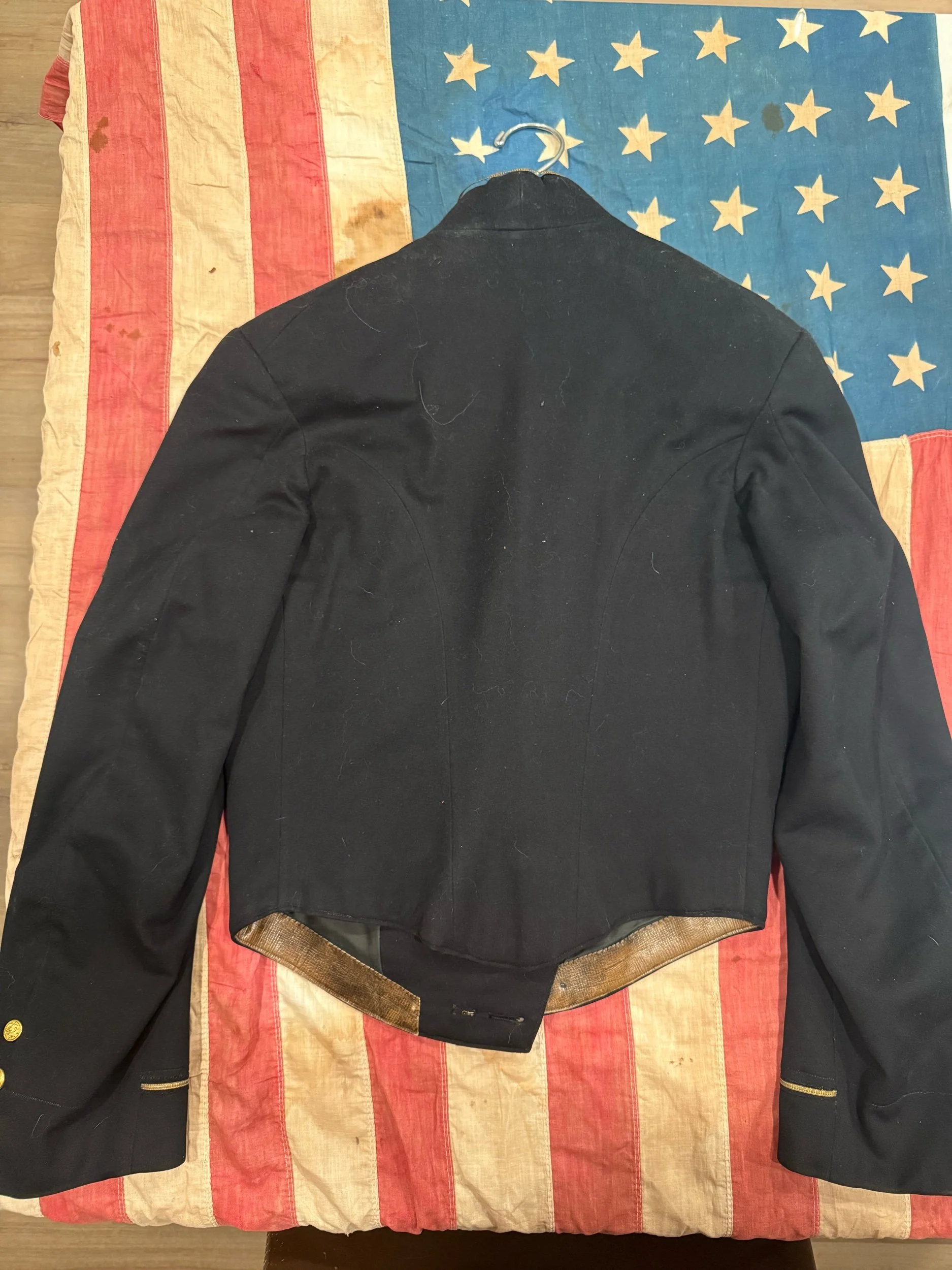
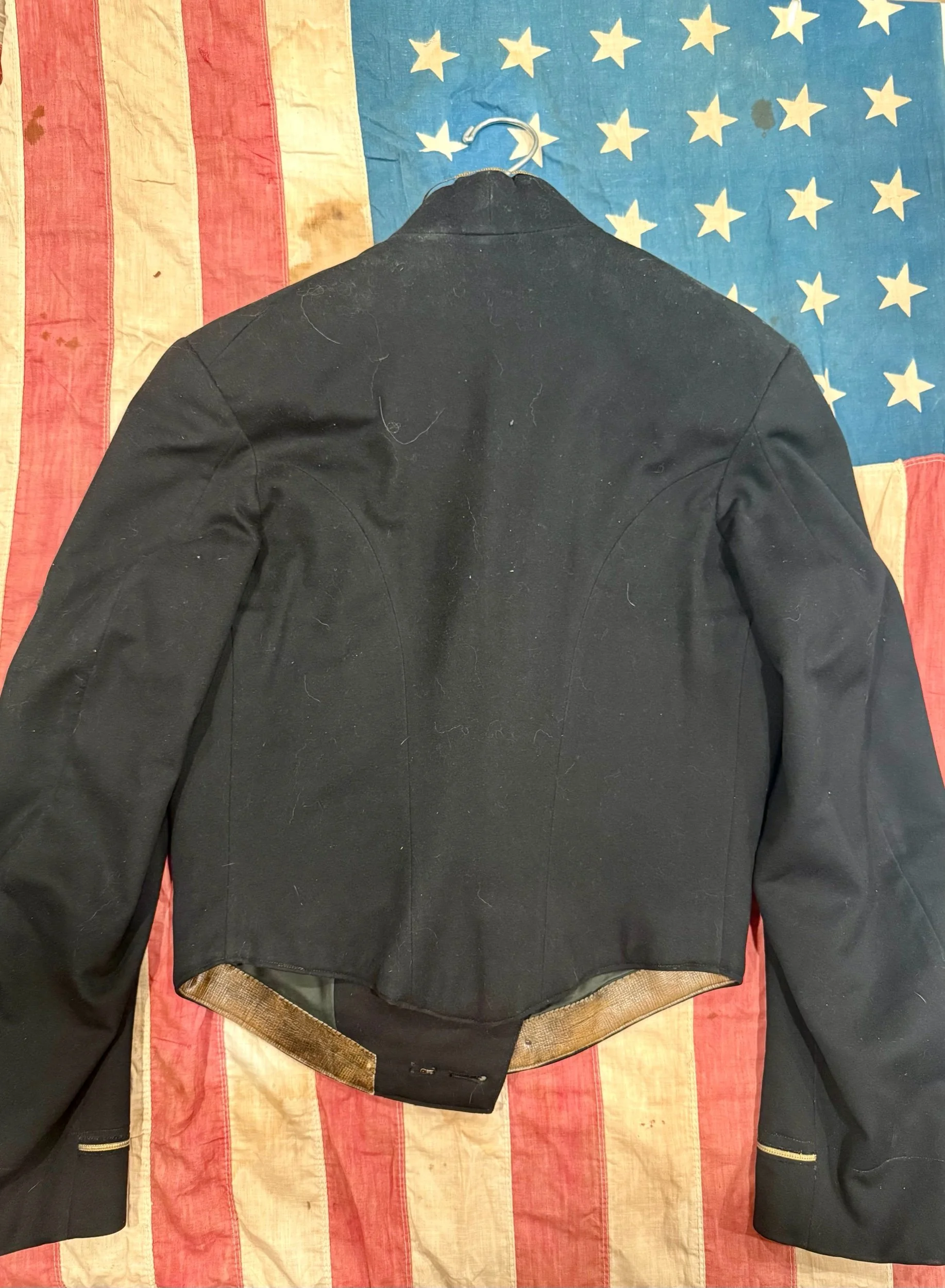
Offered here is an exceptional U.S. Naval Academy parade jacket once owned and worn by William Dennison Alexander, later a Colonel in the United States Army and a combat veteran of both World War I and World War II. This is a museum-quality grouping, deaccessioned directly from a museum collection.
William Dennison Alexander entered the U.S. Naval Academy at Annapolis in 1911, graduating in 1915. While a midshipman, he was a varsity football and lacrosse player, and this parade jacket dates to his Academy years—representing the formative period of a man who would go on to serve in nearly every major American conflict of the first half of the 20th century.
Alexander later transferred from the Navy to the Army, serving with the American Expeditionary Forces in Franceduring World War I. He was wounded by poison gas on July 27, 1918, and although the injury was fully documented, his Purple Heart was not awarded until 1960, more than forty years after the action—an unusual and historically significant circumstance. He went on to serve with distinction in World War II, including combat duty in the Aleutian Campaign and extensive service across the Pacific Theater.
Family Military Significance:
Colonel William Dennison Alexander was the son of Major General Robert Alexander, one of the U.S. Army’s most seasoned combat commanders of the late 19th and early 20th centuries. Major General Alexander served in the Indian Wars, Spanish-American War, Cuban Occupation, Philippine Insurrection, and the Mexican Border conflicts, and during World War I commanded the 77th Infantry Division, leading it in the Vesle–Aisne advance, the Meuse-Argonne Campaign, and the advance on Sedan. The Alexander family represents a rare multi-generation American military legacy, with both father and sons achieving senior officer rank and all interred at Arlington National Cemetery—a lineage that significantly enhances the historical importance and collectability of this museum-quality grouping.
This lot includes:
Original U.S. Naval Academy parade jacket belonging to William Dennison Alexander
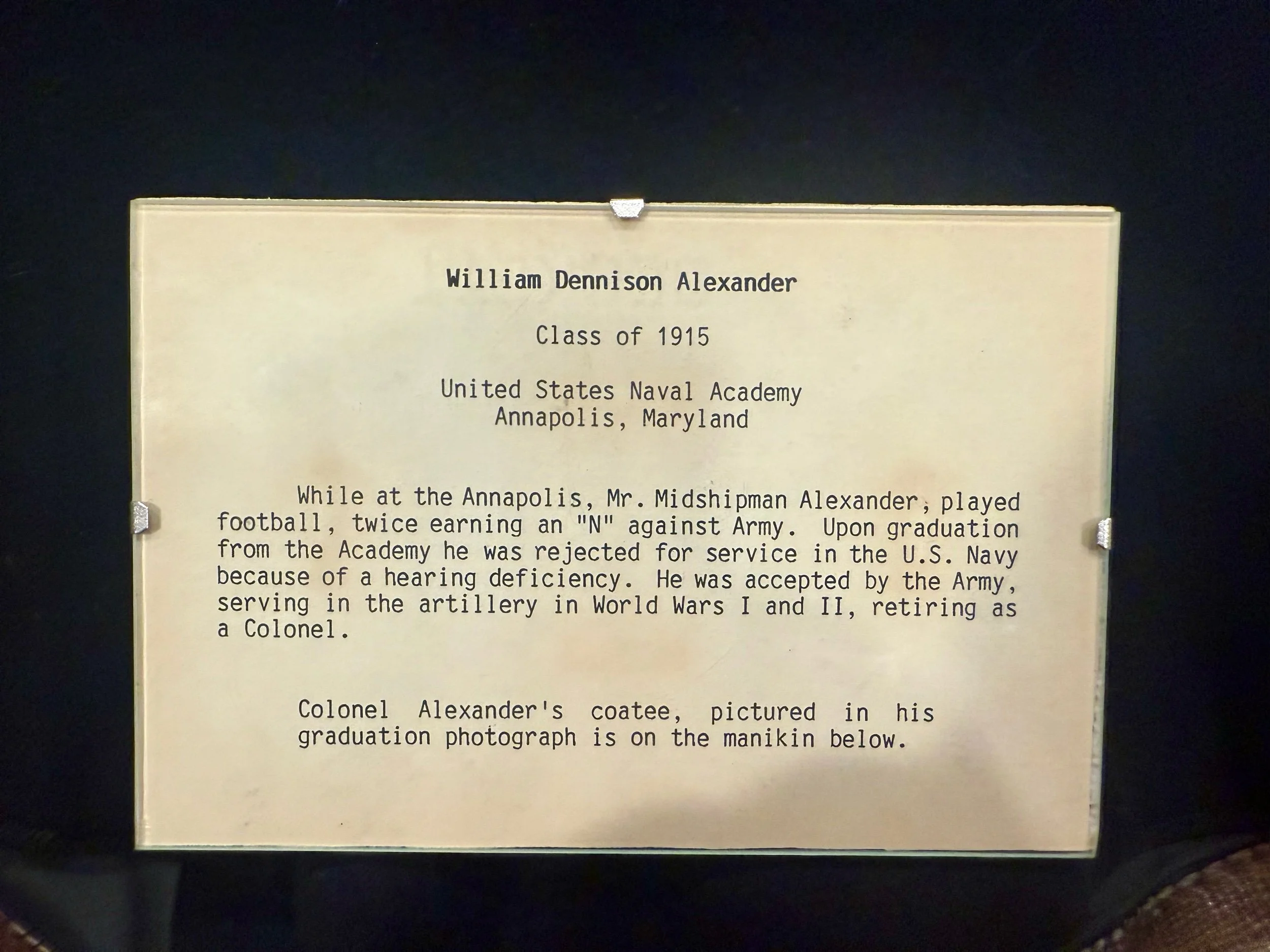
Original museum identification plaque, confirming provenance
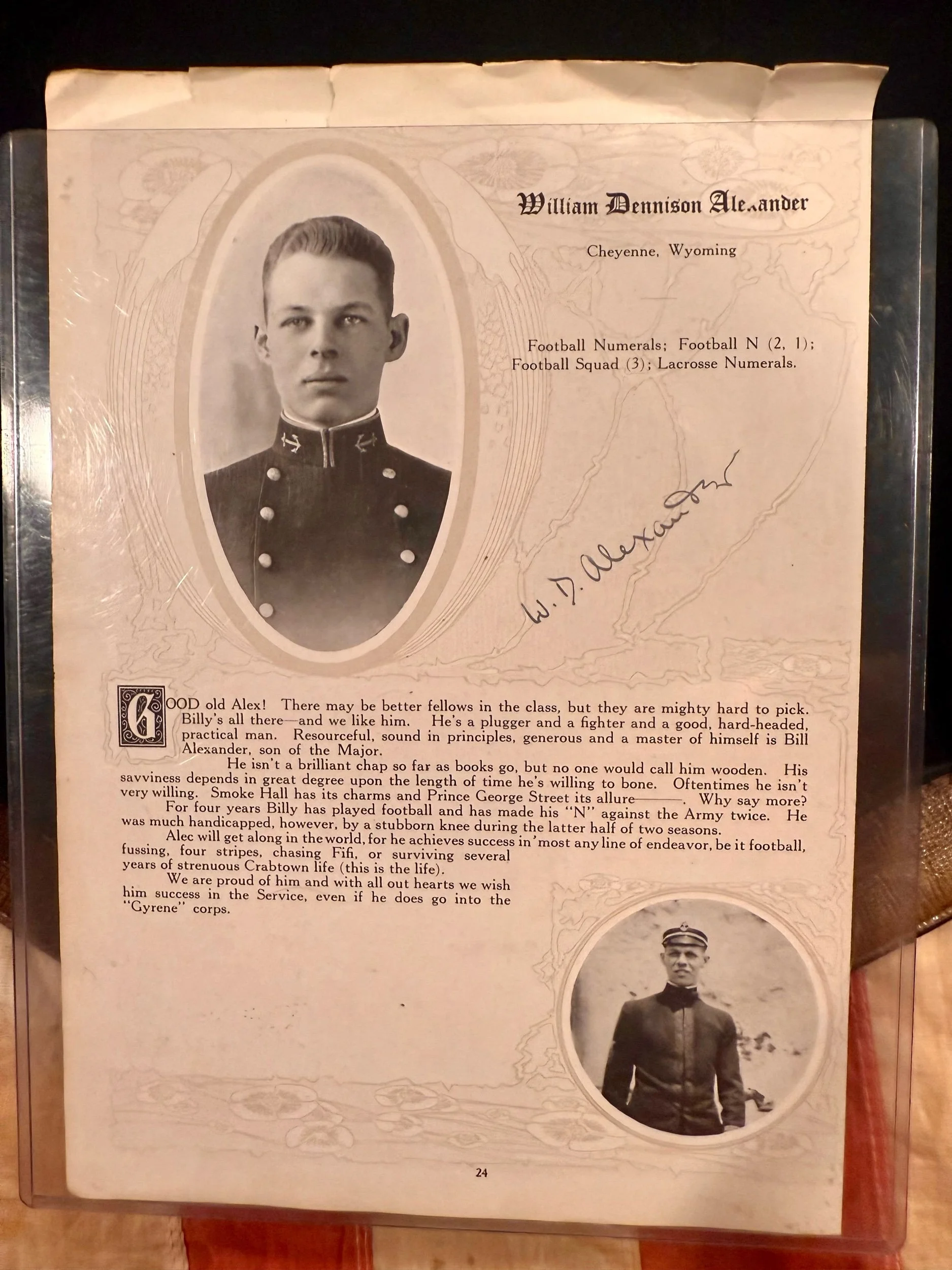
Naval Academy yearbook page bearing Alexander’s original signature
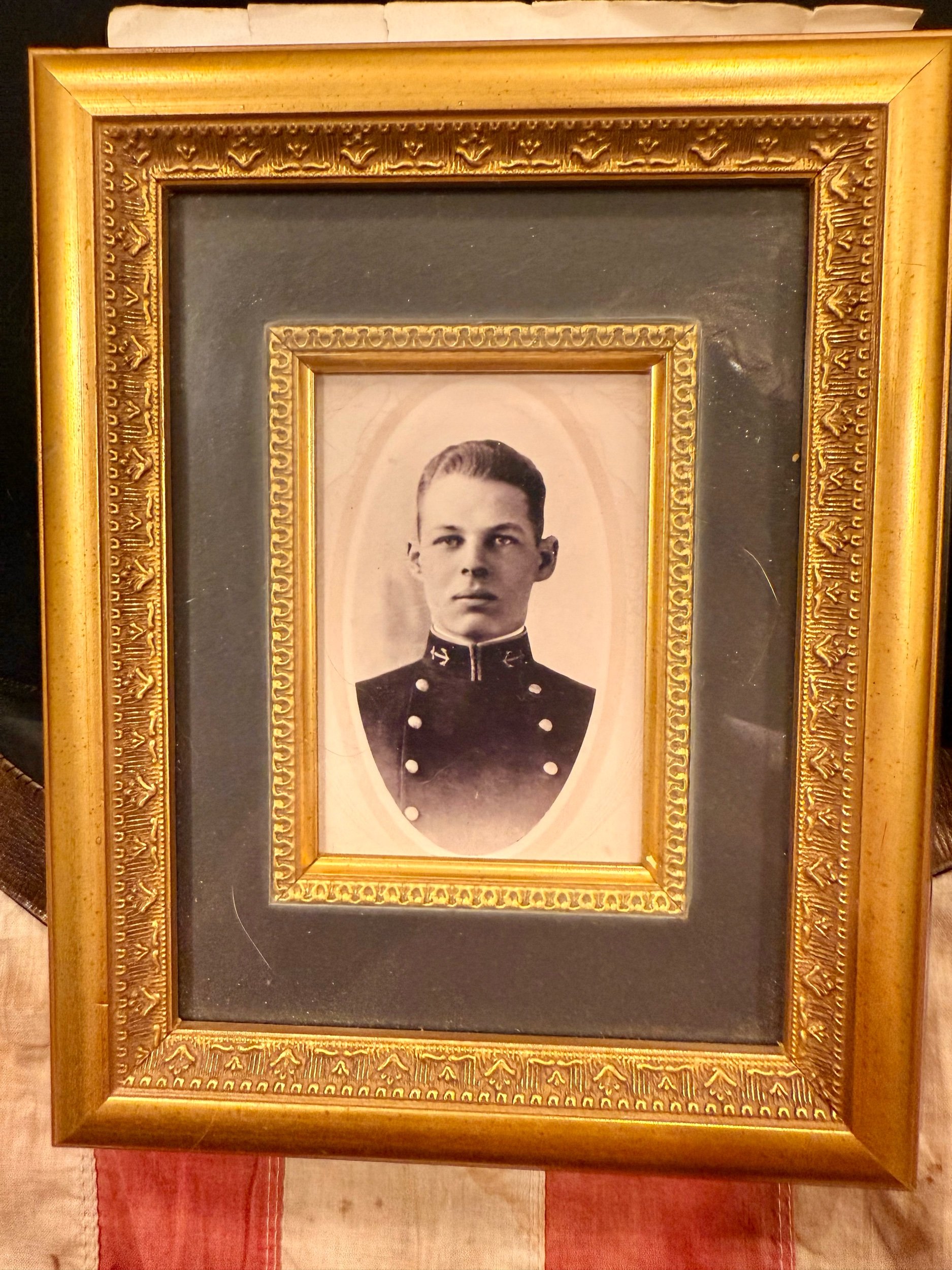
Framed original photograph of Alexander
Alexander was the son of Major General Robert Alexander, commander of the 77th Infantry Division in World War I, making this a rare example of a multi-generation U.S. military family artifact. Members of the Alexander family are interred at Arlington National Cemetery, underscoring the historical importance of this grouping.
Why this piece stands out:
Naval Academy uniforms with solid attribution are scarce; examples tied to officers who later earned the Purple Heartand served in both World Wars are rarer still. With intact provenance, signed material, and original museum documentation, this is not just a uniform, but a fully contextualized historical artifact.
A true museum piece—ready for advanced collectors, institutional acquisition, or high-level display.
COL. WILLIAM DENNISON ALEXANDER (1893–1978)**
World War I & II Veteran • Purple Heart Recipient • Multi-Generation Military Legacy
Offered here is an exceptional U.S. Naval Academy parade jacket once owned and worn by William Dennison Alexander, later a Colonel in the United States Army and a combat veteran of both World War I and World War II. This is a museum-quality grouping, deaccessioned directly from a museum collection.
William Dennison Alexander entered the U.S. Naval Academy at Annapolis in 1911, graduating in 1915. While a midshipman, he was a varsity football and lacrosse player, and this parade jacket dates to his Academy years—representing the formative period of a man who would go on to serve in nearly every major American conflict of the first half of the 20th century.
Alexander later transferred from the Navy to the Army, serving with the American Expeditionary Forces in Franceduring World War I. He was wounded by poison gas on July 27, 1918, and although the injury was fully documented, his Purple Heart was not awarded until 1960, more than forty years after the action—an unusual and historically significant circumstance. He went on to serve with distinction in World War II, including combat duty in the Aleutian Campaign and extensive service across the Pacific Theater.
Family Military Significance:
Colonel William Dennison Alexander was the son of Major General Robert Alexander, one of the U.S. Army’s most seasoned combat commanders of the late 19th and early 20th centuries. Major General Alexander served in the Indian Wars, Spanish-American War, Cuban Occupation, Philippine Insurrection, and the Mexican Border conflicts, and during World War I commanded the 77th Infantry Division, leading it in the Vesle–Aisne advance, the Meuse-Argonne Campaign, and the advance on Sedan. The Alexander family represents a rare multi-generation American military legacy, with both father and sons achieving senior officer rank and all interred at Arlington National Cemetery—a lineage that significantly enhances the historical importance and collectability of this museum-quality grouping.
This lot includes:
Original U.S. Naval Academy parade jacket belonging to William Dennison Alexander
Original museum identification plaque, confirming provenance
Naval Academy yearbook page bearing Alexander’s original signature
Framed original photograph of Alexander
Alexander was the son of Major General Robert Alexander, commander of the 77th Infantry Division in World War I, making this a rare example of a multi-generation U.S. military family artifact. Members of the Alexander family are interred at Arlington National Cemetery, underscoring the historical importance of this grouping.
Why this piece stands out:
Naval Academy uniforms with solid attribution are scarce; examples tied to officers who later earned the Purple Heartand served in both World Wars are rarer still. With intact provenance, signed material, and original museum documentation, this is not just a uniform, but a fully contextualized historical artifact.
A true museum piece—ready for advanced collectors, institutional acquisition, or high-level display.