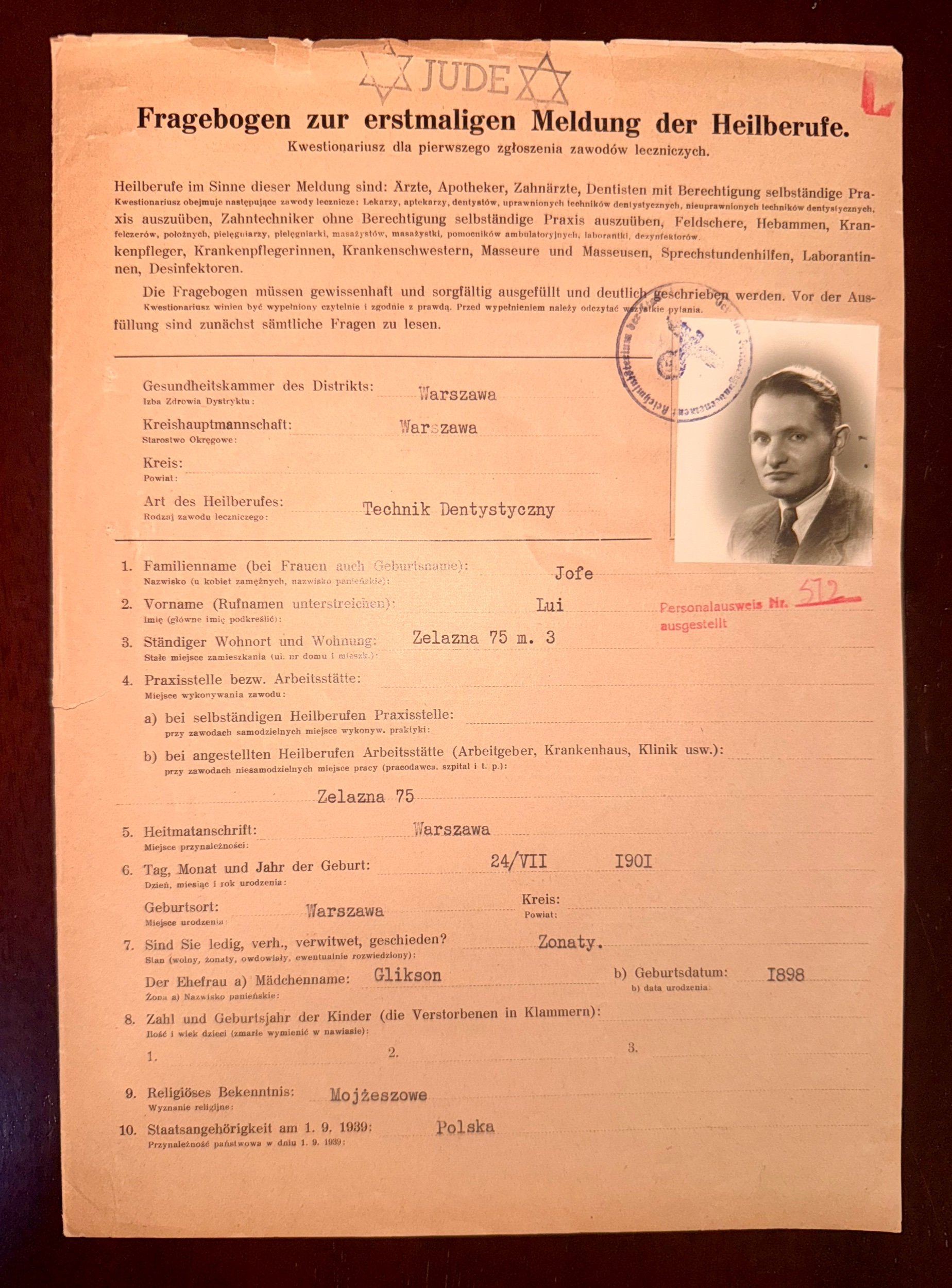
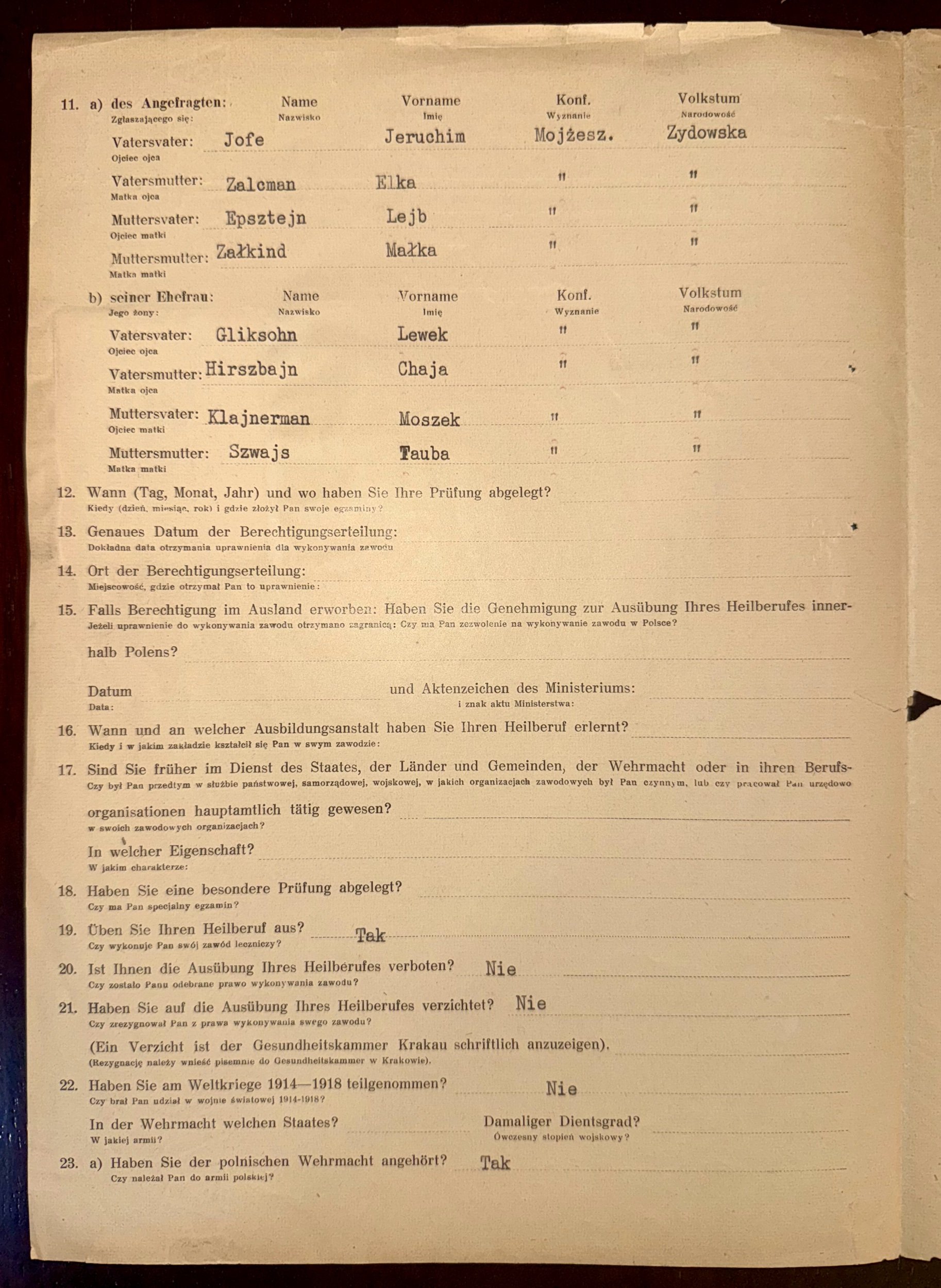
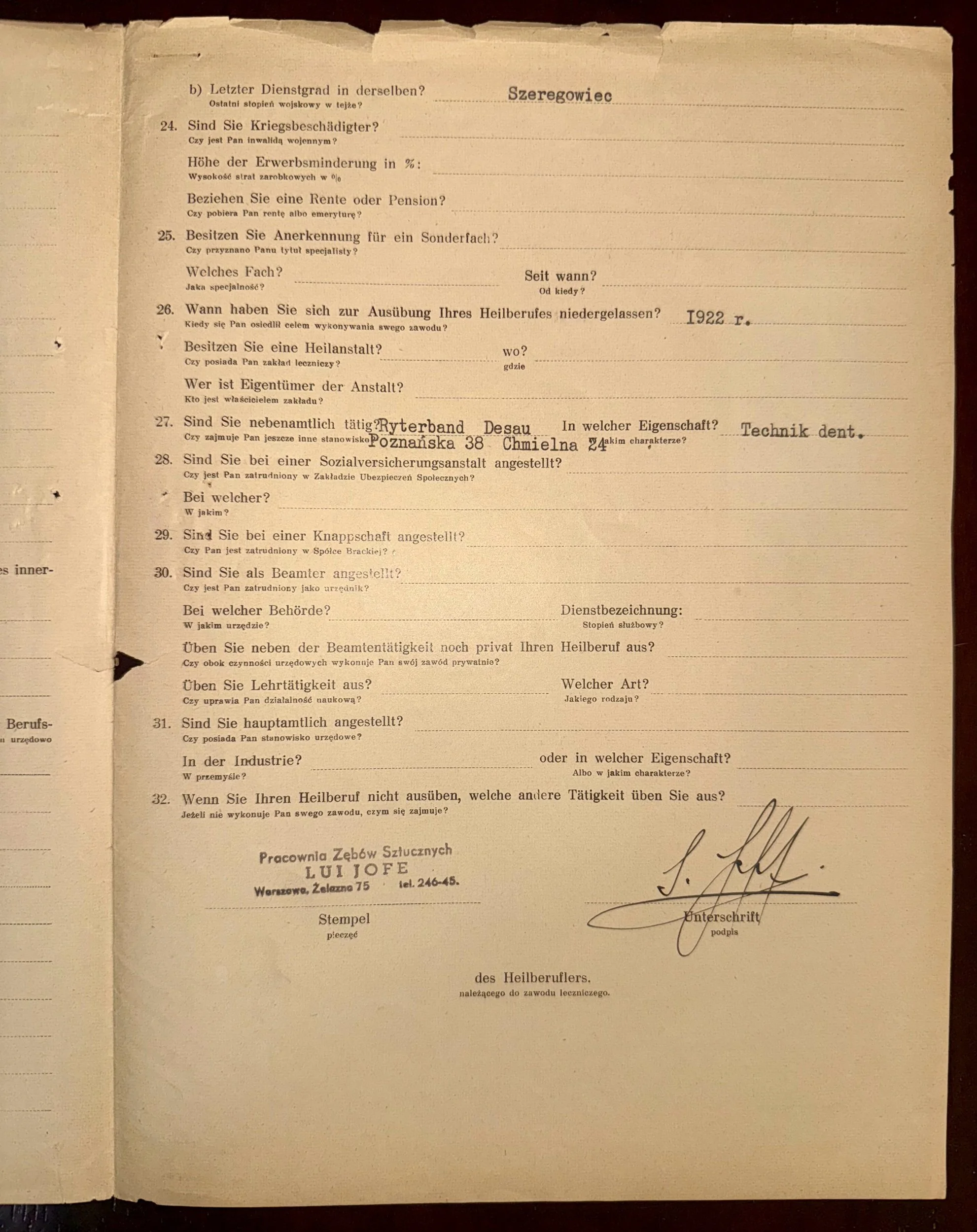
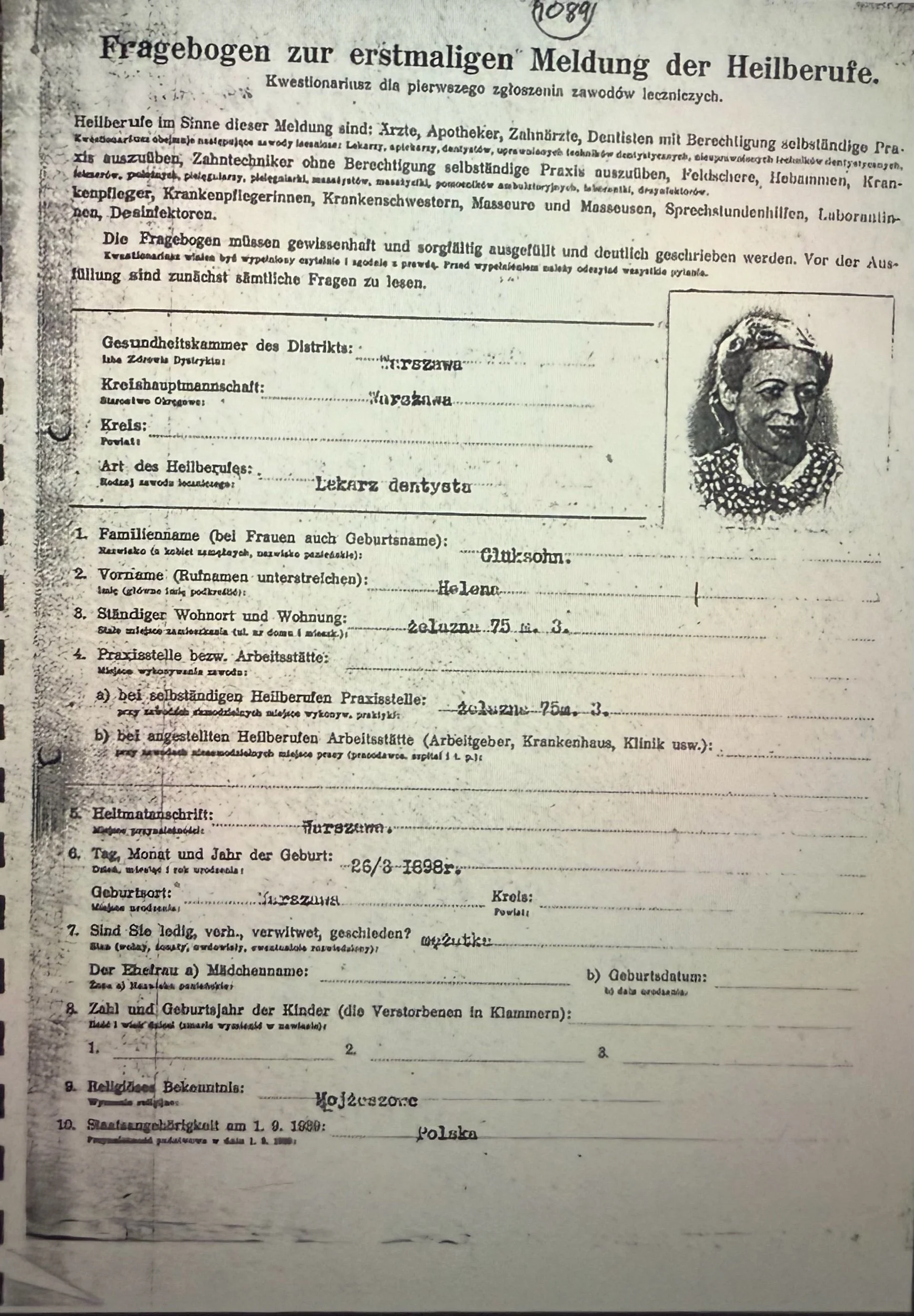
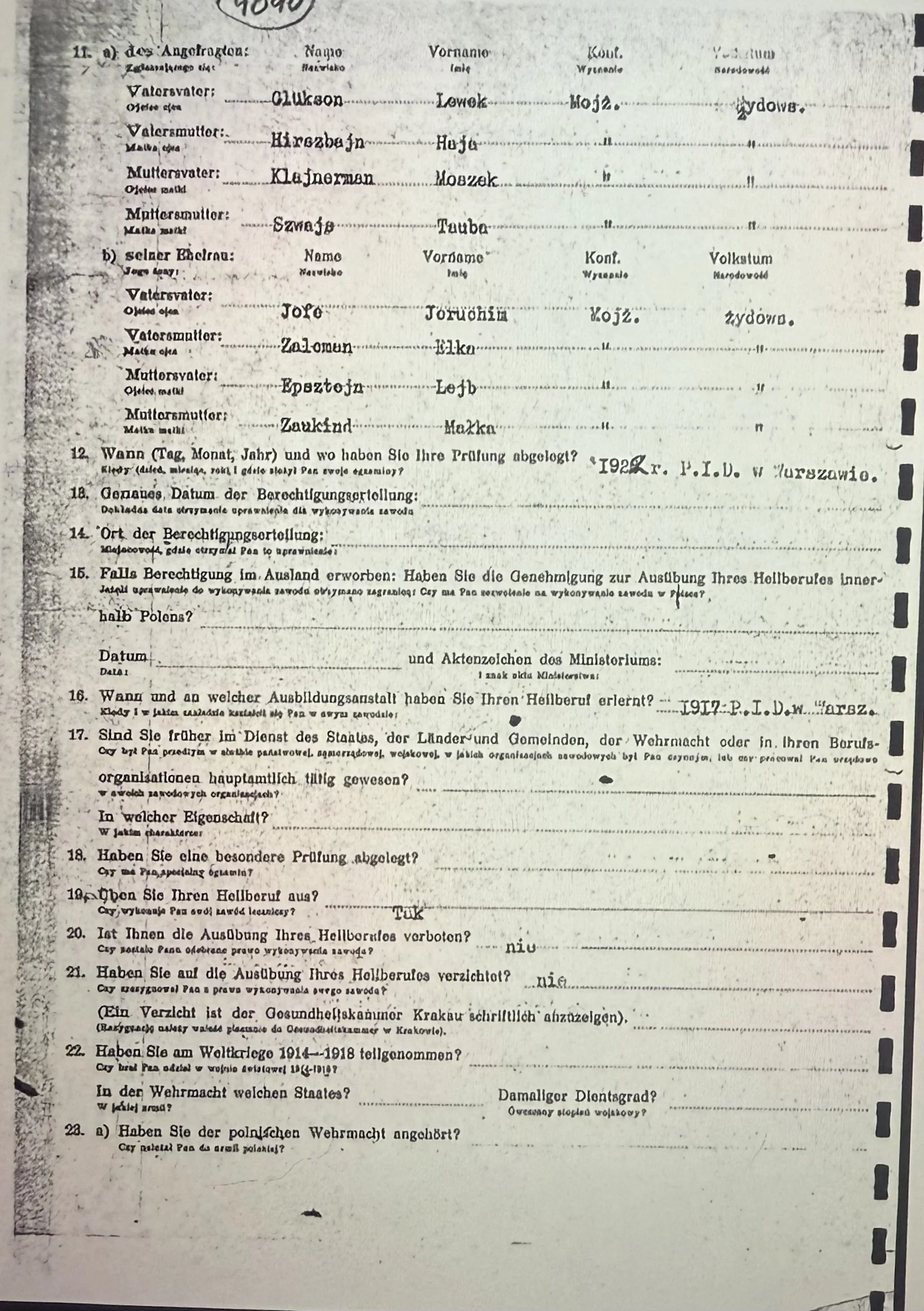
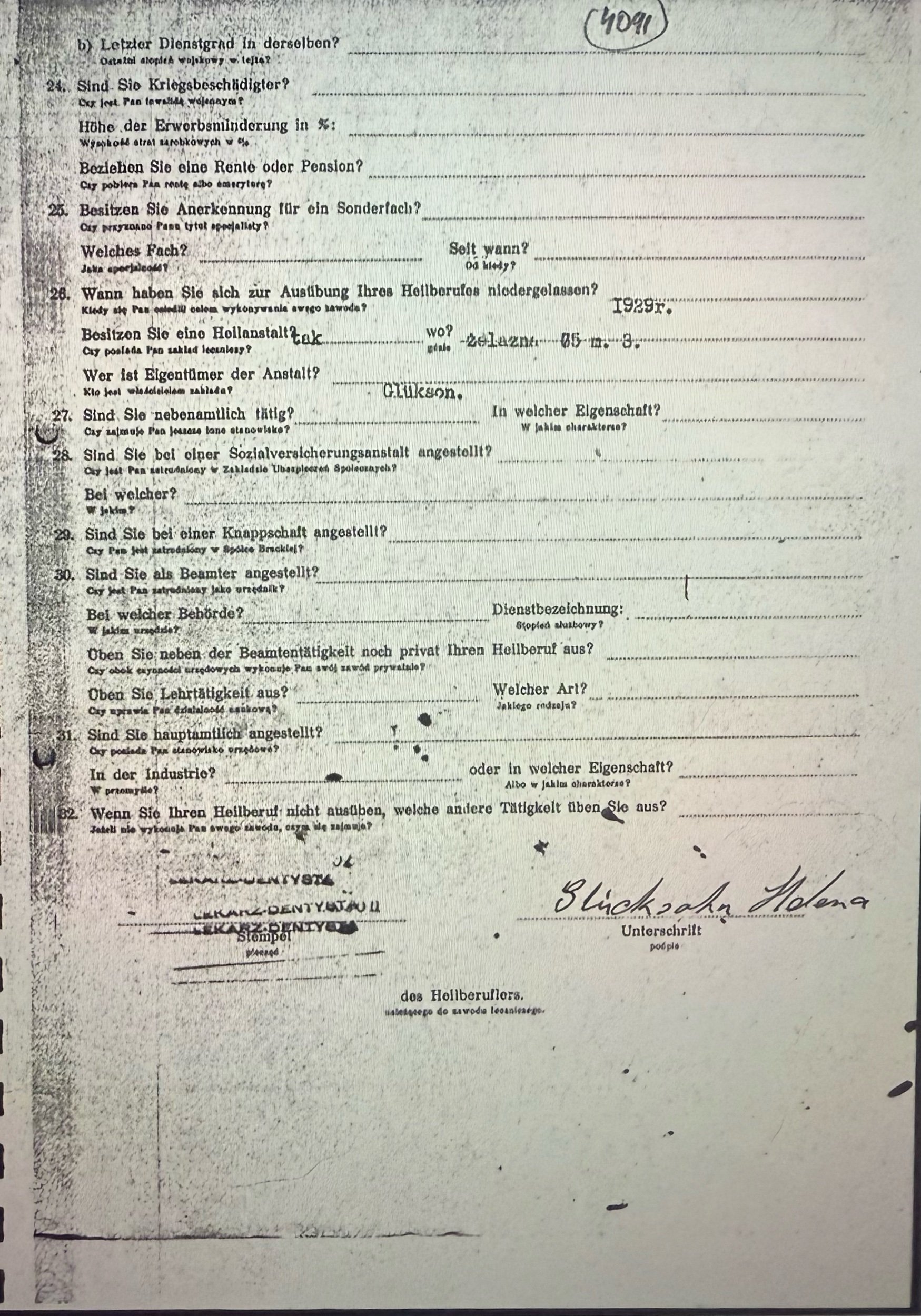
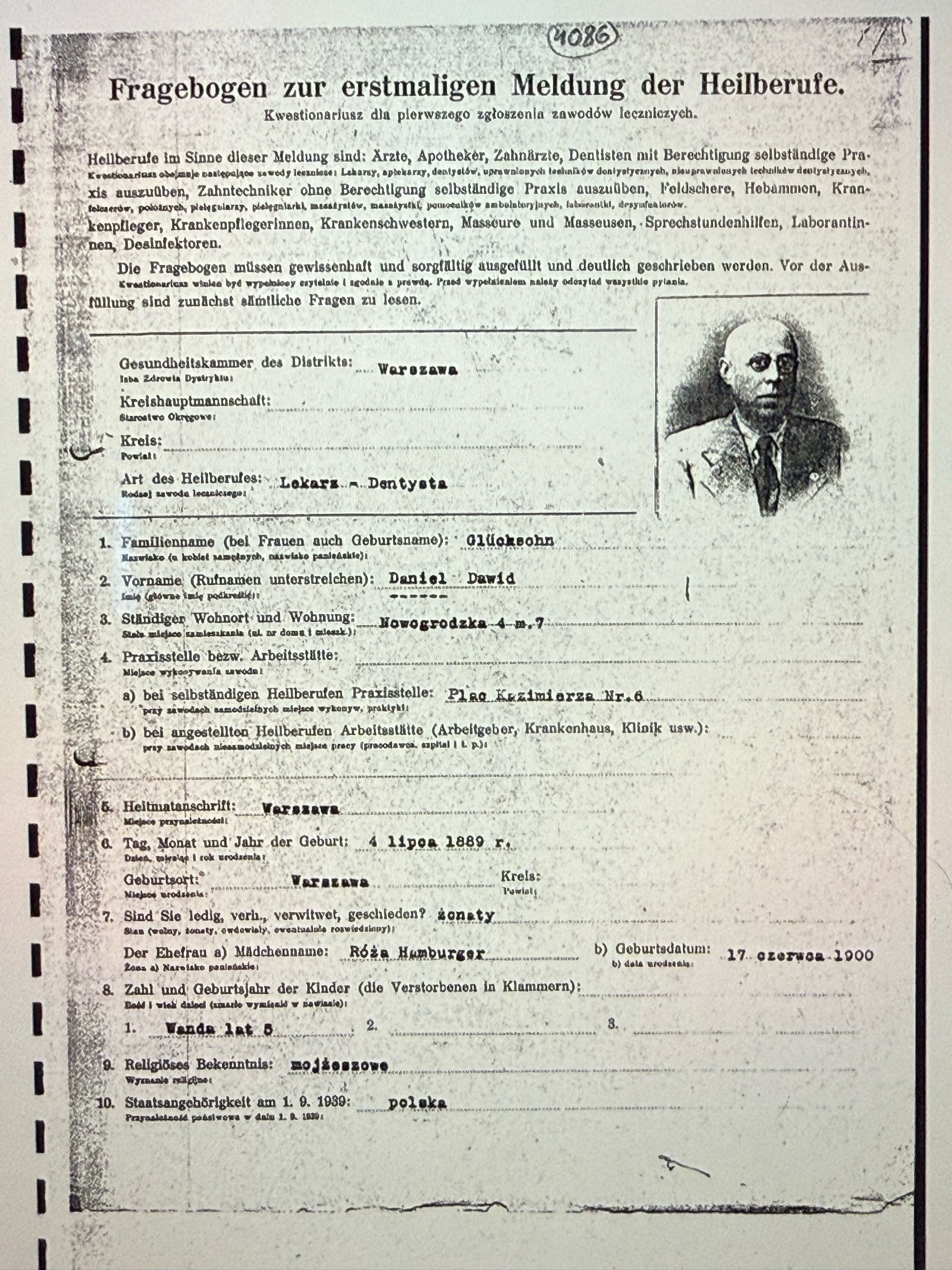
Offered here is a deeply moving and historically significant Holocaust-era document issued for medical professionals, completed within the Warsaw Ghetto during the German occupation of Poland. Such documents were required by the German authorities to record an individual’s pre-war profession, particularly for those with medical or technical skills deemed useful under occupation. Surviving examples are exceptionally scarce.
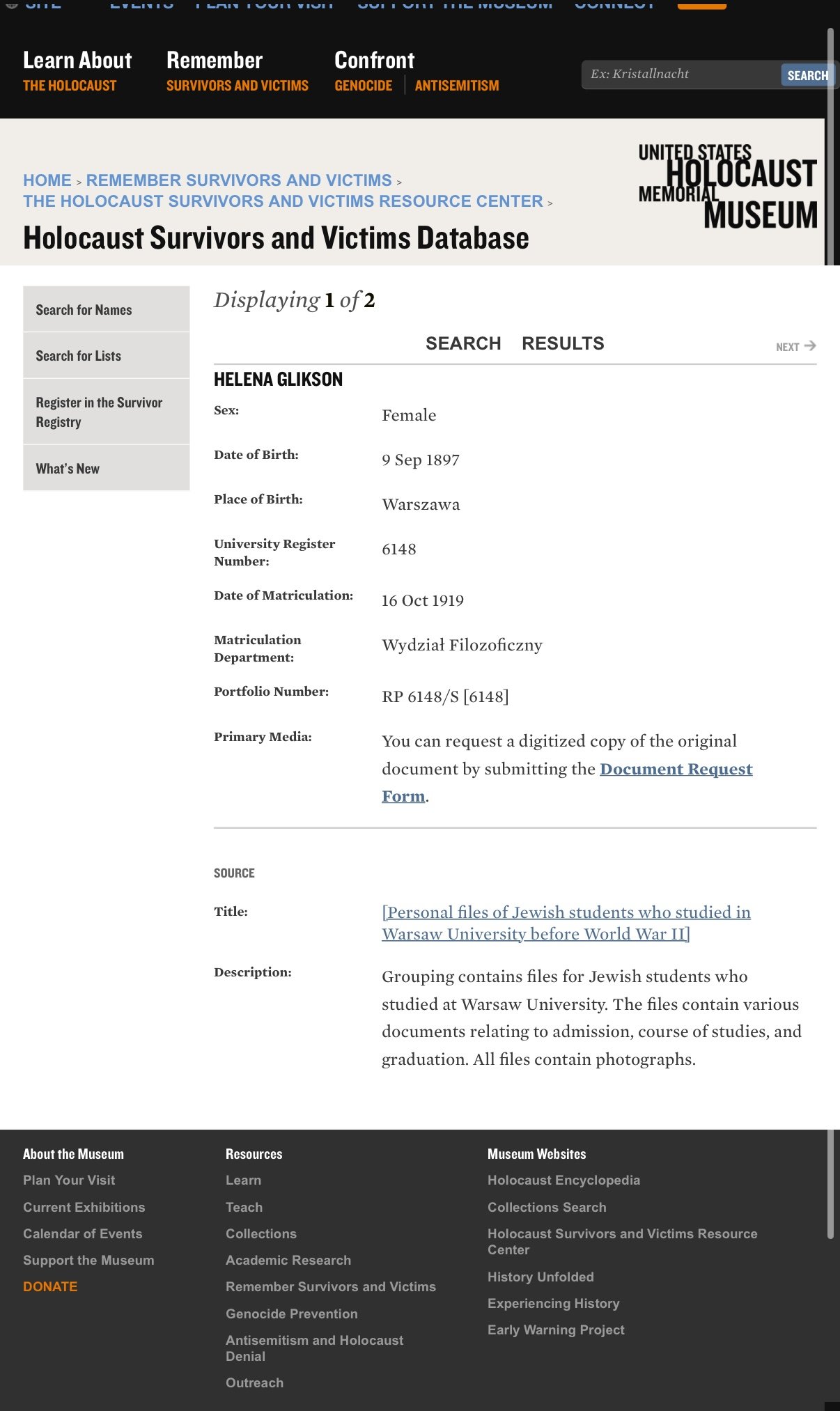
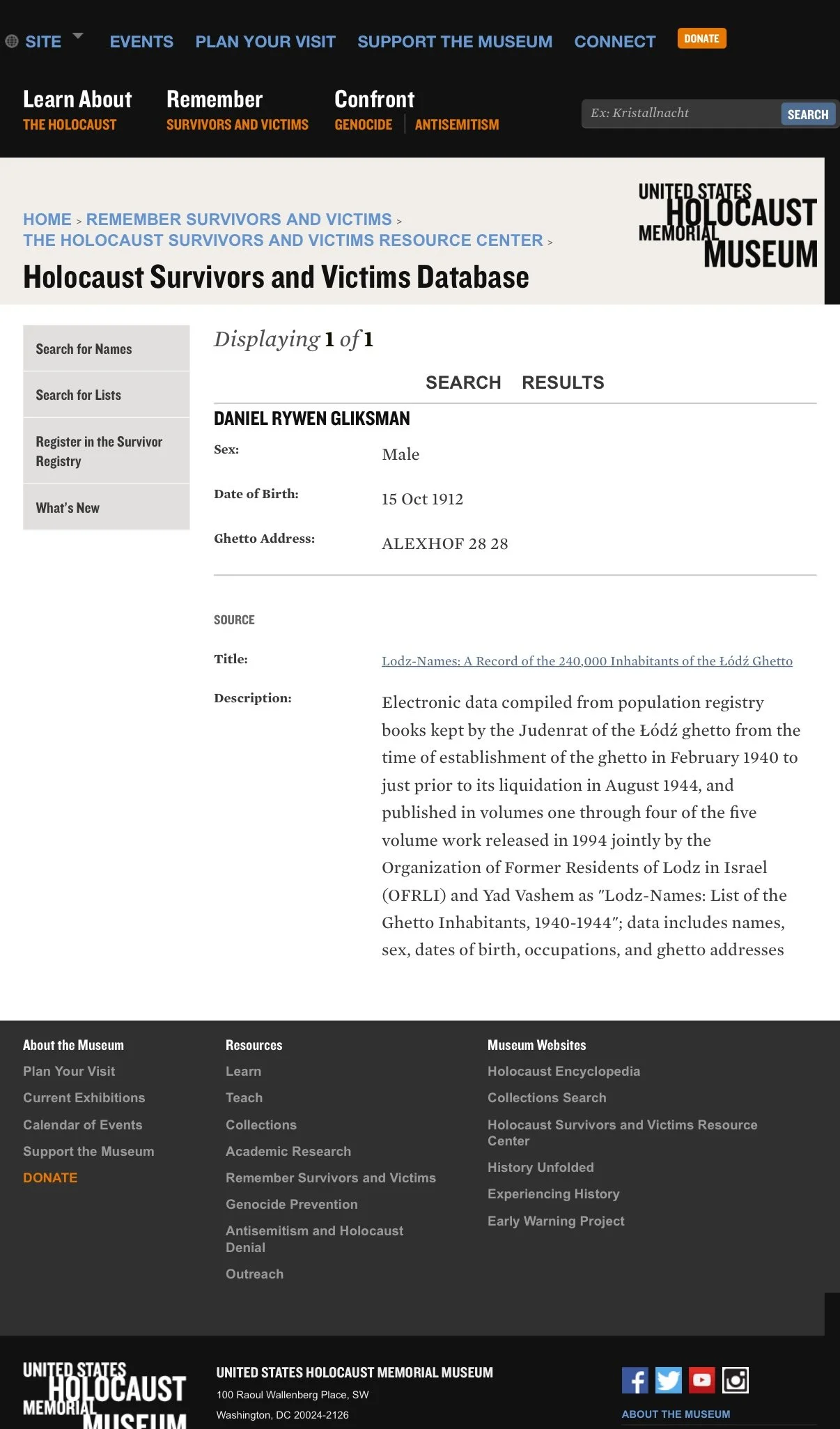
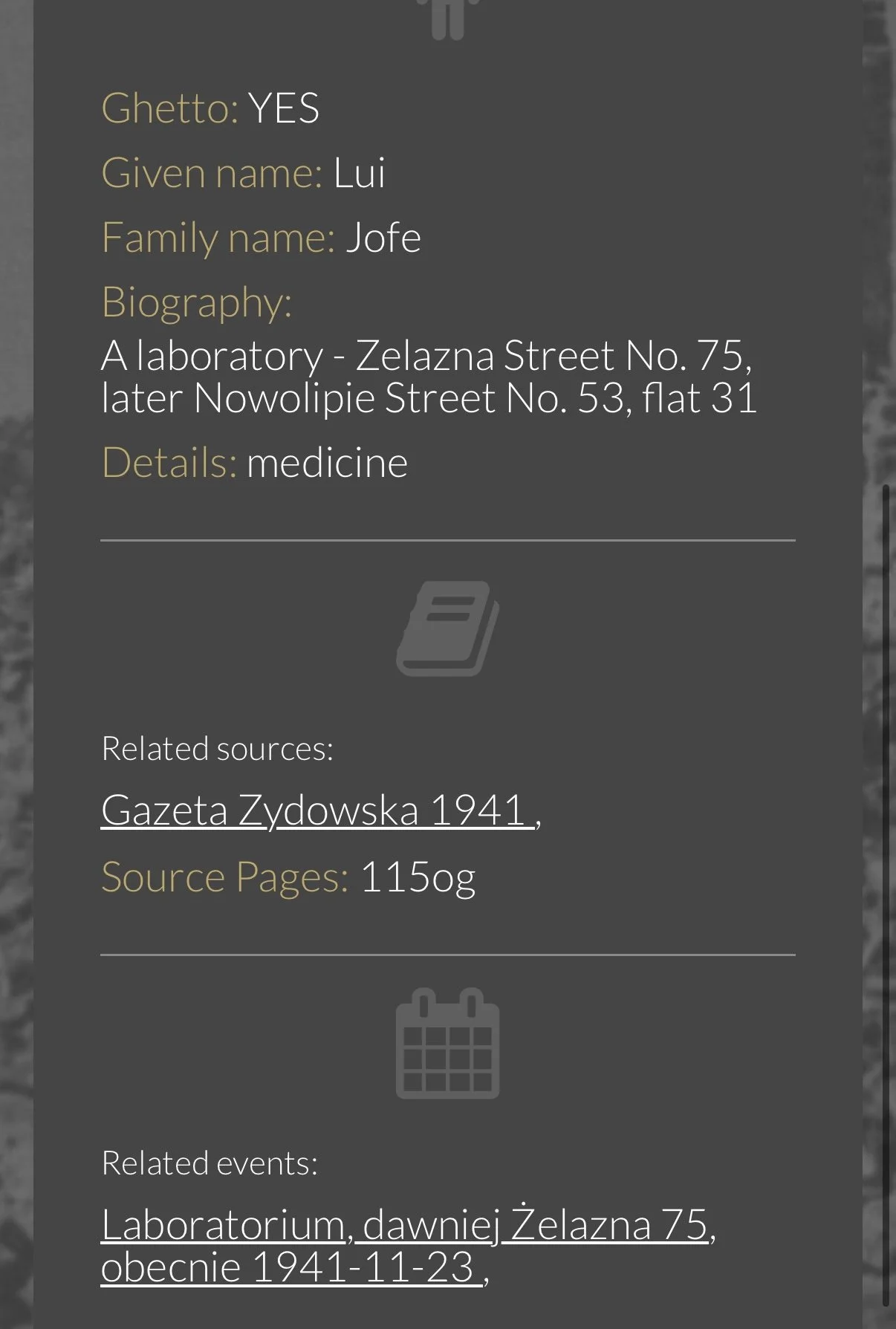
This specific document was filled out for Lui Jofe, who is listed as a dental assistant. His immediate family was also medically trained: his wife Helen Gluksohn was a practicing dentist, as was her brother Daniel Gluksohn. Copies of their related documents are included, providing rare corroborating context and strengthening the historical integrity of this grouping.
According to surviving documentation, the family resided at Żelazna Street No. 75 in 1941, placing them squarely within the confines of the Warsaw Ghetto, one of the most infamous and devastating ghettos of World War II.
By mid-1942, conditions within the ghetto had deteriorated catastrophically. More than 83,000 Jews had already died from starvation, disease, or executions. Soon after, mass deportations commenced. By the end of August 1942, approximately 265,000 people had been murdered, primarily at Treblinka, reducing the ghetto population to roughly 55,000 survivors.
The Warsaw Ghetto is also remembered for its unparalleled act of resistance: the Warsaw Ghetto Uprising, which began on April 19, 1943, when German forces entered the ghetto for its final liquidation. This was the largest Jewish armed revolt of the Holocaust and the first urban uprising against German occupation in Europe. Though vastly outnumbered and outgunned, Jewish fighters resisted for nearly a month, inflicting unexpected casualties on the Germans and leaving an enduring legacy of courage and defiance. Most remaining survivors were ultimately killed following the uprising.
Despite extensive research, no post-war records have been found for Lui Jofe, Helen Gluksohn, or Daniel Gluksohn. Given the extremely small number of survivors from the Warsaw Ghetto, it is tragically unlikely that any of them survived the war.
This document stands as a somber, personal testament to lives caught in one of history’s darkest chapters. Holocaust documents tied to named individuals—especially those identifying medical professionals within the Warsaw Ghetto—are exceedingly rare and seldom encountered on the market. An irreplaceable artifact of remembrance, scholarship, and warning, this piece carries immense historical and emotional weight.
Offered here is a deeply moving and historically significant Holocaust-era document issued for medical professionals, completed within the Warsaw Ghetto during the German occupation of Poland. Such documents were required by the German authorities to record an individual’s pre-war profession, particularly for those with medical or technical skills deemed useful under occupation. Surviving examples are exceptionally scarce.
This specific document was filled out for Lui Jofe, who is listed as a dental assistant. His immediate family was also medically trained: his wife Helen Gluksohn was a practicing dentist, as was her brother Daniel Gluksohn. Copies of their related documents are included, providing rare corroborating context and strengthening the historical integrity of this grouping.
According to surviving documentation, the family resided at Żelazna Street No. 75 in 1941, placing them squarely within the confines of the Warsaw Ghetto, one of the most infamous and devastating ghettos of World War II.
By mid-1942, conditions within the ghetto had deteriorated catastrophically. More than 83,000 Jews had already died from starvation, disease, or executions. Soon after, mass deportations commenced. By the end of August 1942, approximately 265,000 people had been murdered, primarily at Treblinka, reducing the ghetto population to roughly 55,000 survivors.
The Warsaw Ghetto is also remembered for its unparalleled act of resistance: the Warsaw Ghetto Uprising, which began on April 19, 1943, when German forces entered the ghetto for its final liquidation. This was the largest Jewish armed revolt of the Holocaust and the first urban uprising against German occupation in Europe. Though vastly outnumbered and outgunned, Jewish fighters resisted for nearly a month, inflicting unexpected casualties on the Germans and leaving an enduring legacy of courage and defiance. Most remaining survivors were ultimately killed following the uprising.
Despite extensive research, no post-war records have been found for Lui Jofe, Helen Gluksohn, or Daniel Gluksohn. Given the extremely small number of survivors from the Warsaw Ghetto, it is tragically unlikely that any of them survived the war.
This document stands as a somber, personal testament to lives caught in one of history’s darkest chapters. Holocaust documents tied to named individuals—especially those identifying medical professionals within the Warsaw Ghetto—are exceedingly rare and seldom encountered on the market. An irreplaceable artifact of remembrance, scholarship, and warning, this piece carries immense historical and emotional weight.