WWII German Artifact Grouping: Berghof Bunker Tile & 1938 Reichstag Referendum Ballot — Gettysburg Museum COA
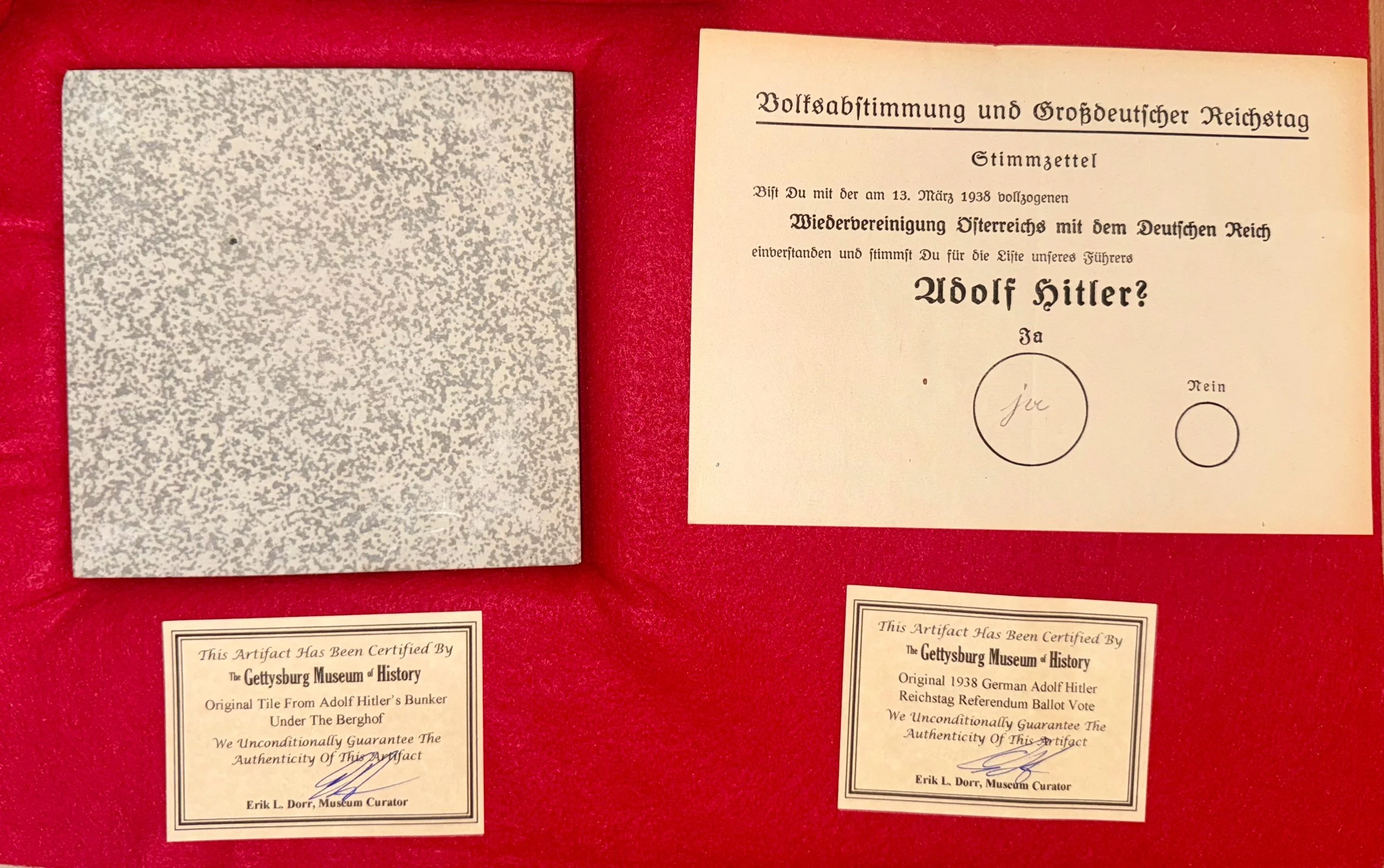
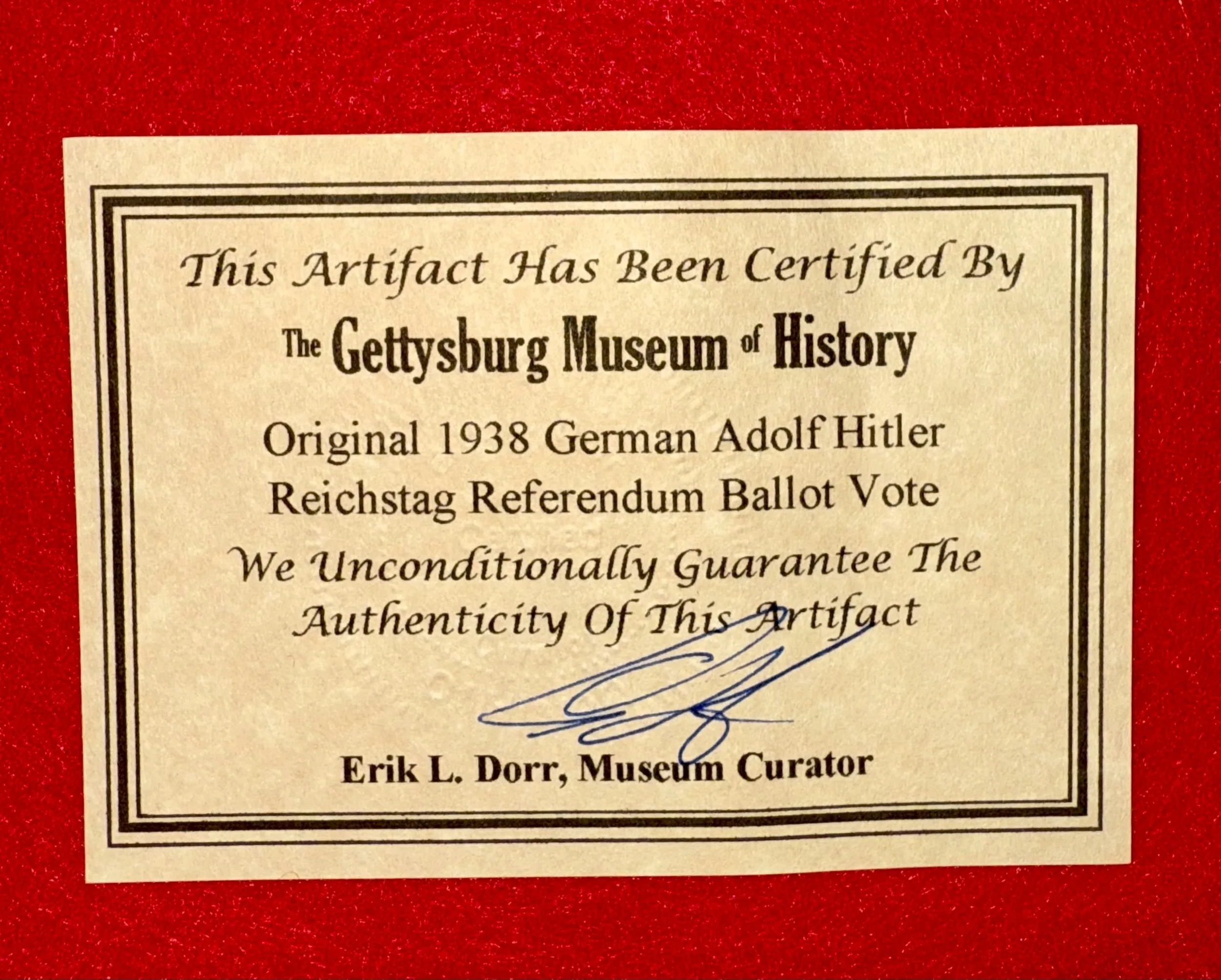
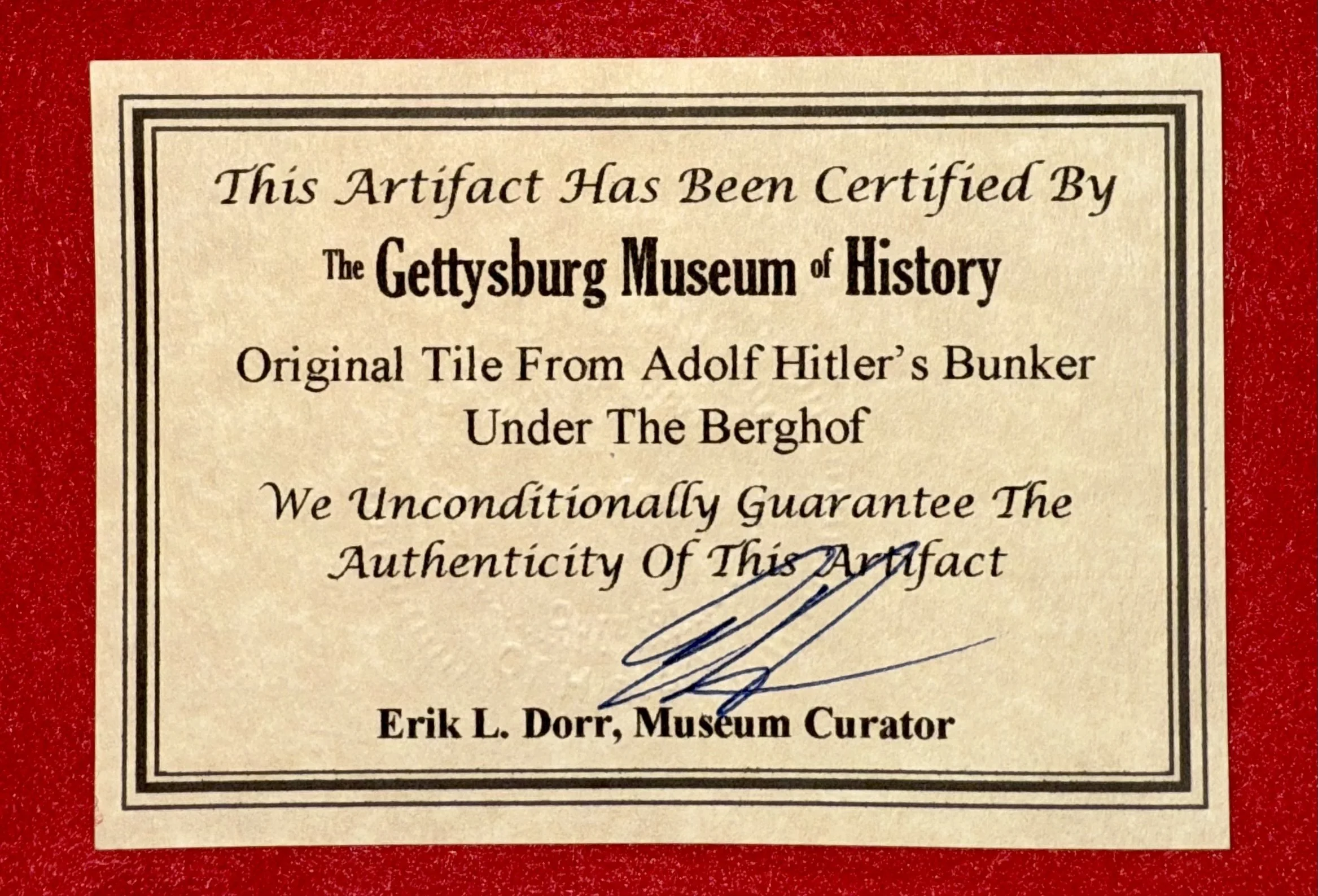
Offered is a historically significant WWII artifact grouping consisting of an original floor tile attributed to Adolf Hitler’s bunker (air raid shelter) beneath the Berghof on the Obersalzberg near Berchtesgaden, Germany, along with an original 1938 German Reichstag referendum ballot voting “Ja” for Adolf Hitler following the annexation of Austria. Both items are accompanied by complete Certificates of Authenticity issued by the Gettysburg Museum of History, documenting their identification and historical attribution.
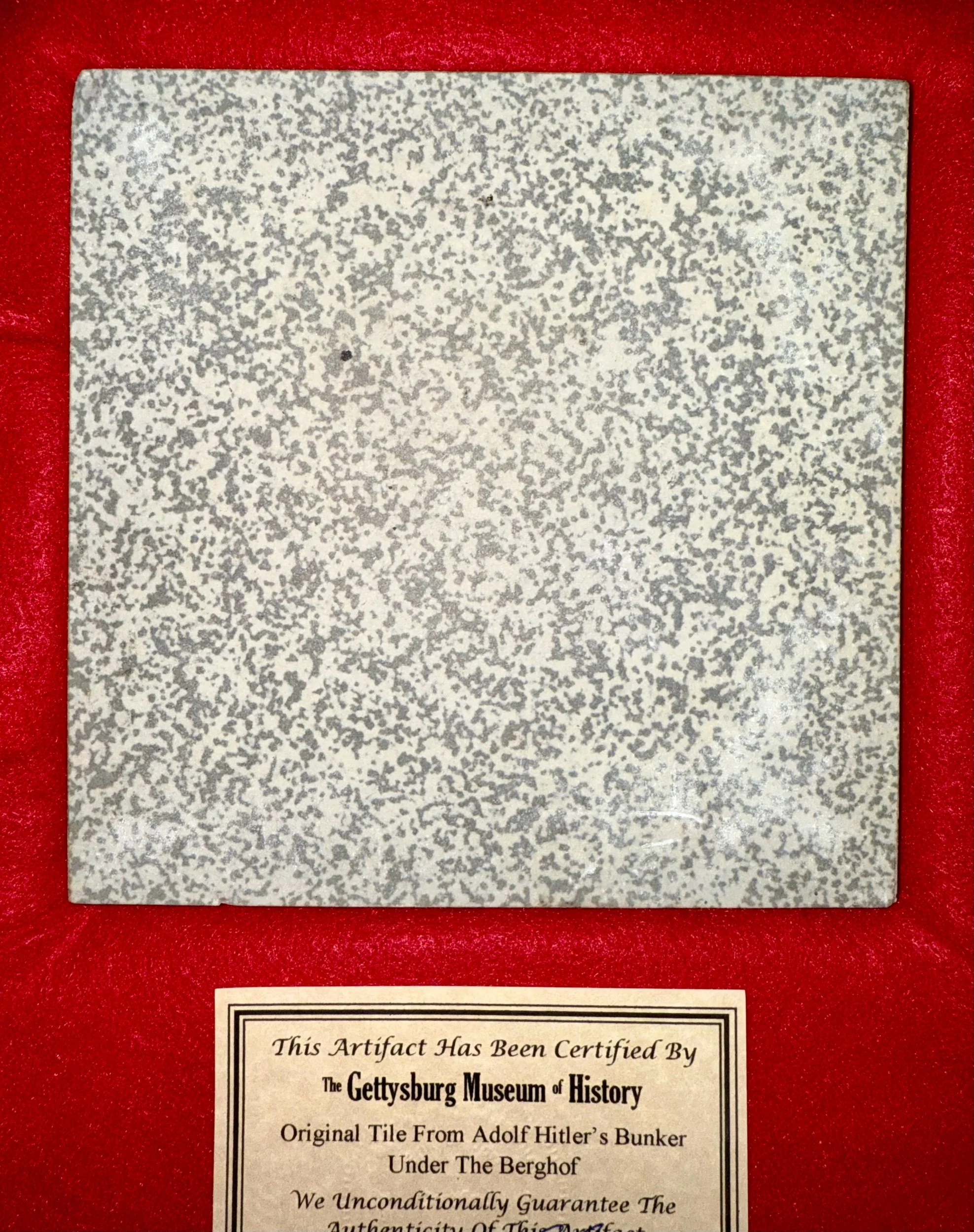
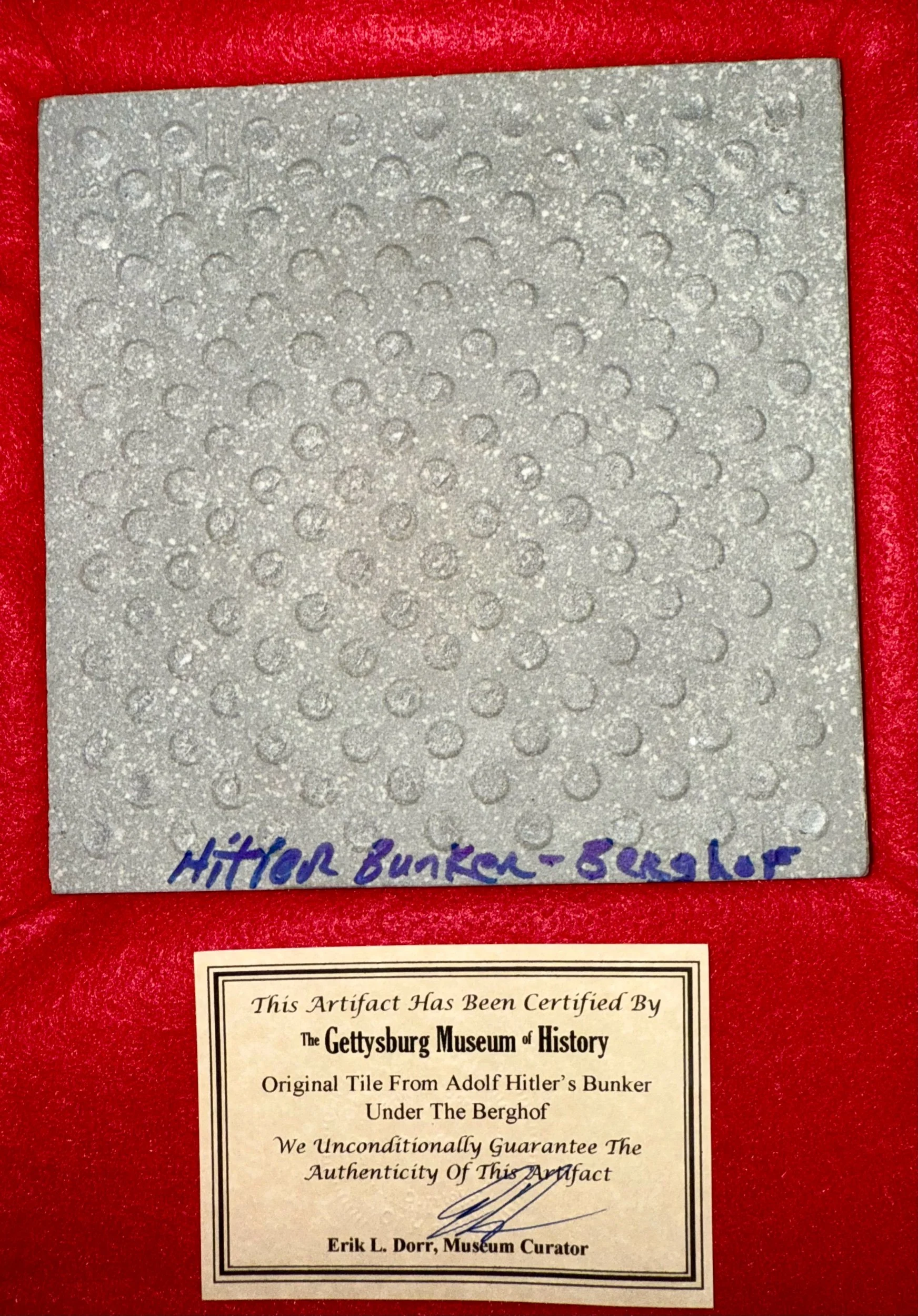
The bunker tile measures approximately 6" x 6" and 1/4" thick and features a brown speckled pattern, consistent with floor tiles documented in period photographs of the Berghof tunnel system, where white tiles lined the walls and darker tiles were used on the floors. The Berghof tunnels have been sealed for decades, and original material from this site is no longer accessible, contributing to the scarcity of surviving examples. The tile remains in good condition and is a substantial, heavy piece.
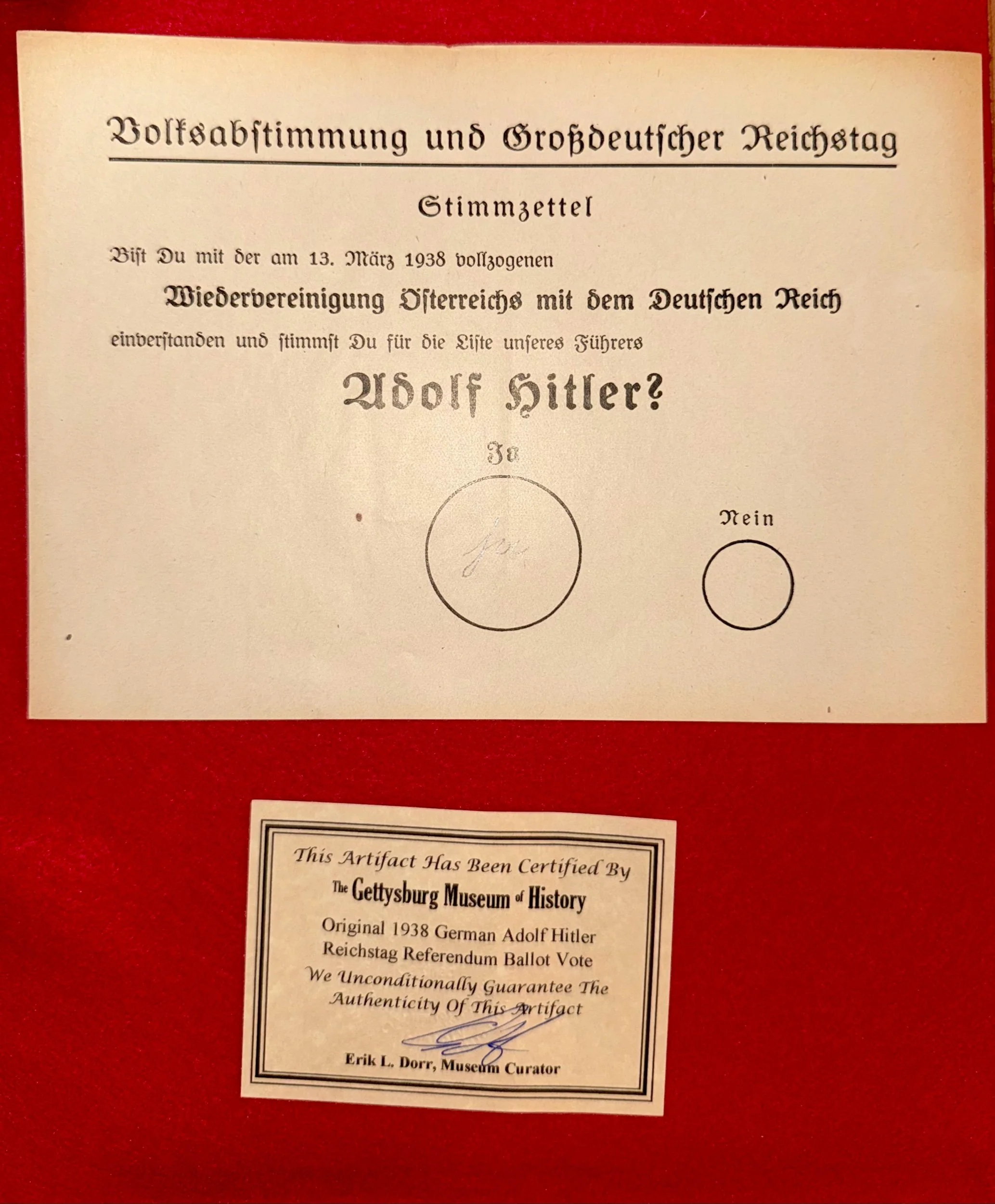
Also included is an original 1938 Reichstag referendum ballot, asking voters to approve both the annexation of Austria into the German Reich and Adolf Hitler’s leadership. The ballot clearly illustrates the political environment of the period, including the disproportionately large “Ja” (Yes) voting circle compared to “Nein” (No). Examples of original Nazi-era political voting material are uncommon due to widespread destruction during postwar de-Nazification. This example shows expected age toning and light storage wear, consistent with period paper ephemera.
The items are sold together in a display case and are presented strictly as historical artifacts. The Gettysburg Museum of History states that it does not support or condone Adolf Hitler or the Nazi Party, and these materials are offered solely for historical, educational, and collecting purposes.
A rare, museum-documented WWII artifact grouping representing two distinct and important elements of Third Reich history.
Offered is a historically significant WWII artifact grouping consisting of an original floor tile attributed to Adolf Hitler’s bunker (air raid shelter) beneath the Berghof on the Obersalzberg near Berchtesgaden, Germany, along with an original 1938 German Reichstag referendum ballot voting “Ja” for Adolf Hitler following the annexation of Austria. Both items are accompanied by complete Certificates of Authenticity issued by the Gettysburg Museum of History, documenting their identification and historical attribution.
The bunker tile measures approximately 6" x 6" and 1/4" thick and features a brown speckled pattern, consistent with floor tiles documented in period photographs of the Berghof tunnel system, where white tiles lined the walls and darker tiles were used on the floors. The Berghof tunnels have been sealed for decades, and original material from this site is no longer accessible, contributing to the scarcity of surviving examples. The tile remains in good condition and is a substantial, heavy piece.
Also included is an original 1938 Reichstag referendum ballot, asking voters to approve both the annexation of Austria into the German Reich and Adolf Hitler’s leadership. The ballot clearly illustrates the political environment of the period, including the disproportionately large “Ja” (Yes) voting circle compared to “Nein” (No). Examples of original Nazi-era political voting material are uncommon due to widespread destruction during postwar de-Nazification. This example shows expected age toning and light storage wear, consistent with period paper ephemera.
The items are sold together in a display case and are presented strictly as historical artifacts. The Gettysburg Museum of History states that it does not support or condone Adolf Hitler or the Nazi Party, and these materials are offered solely for historical, educational, and collecting purposes.
A rare, museum-documented WWII artifact grouping representing two distinct and important elements of Third Reich history.