Documented WWII CBI Theater Grouping to George E. Simpson, U.S. Army (India & Burma, 1944–45)
Collection Overview
This documented and cohesive World War II archive represents the overseas service of George E. Simpson (March 10, 1917 – 1988), a United States Army serviceman from Canonsburg, Washington County, Pennsylvania, who served in the China–Burma–India (CBI) Theater from late 1944 through October 1945.
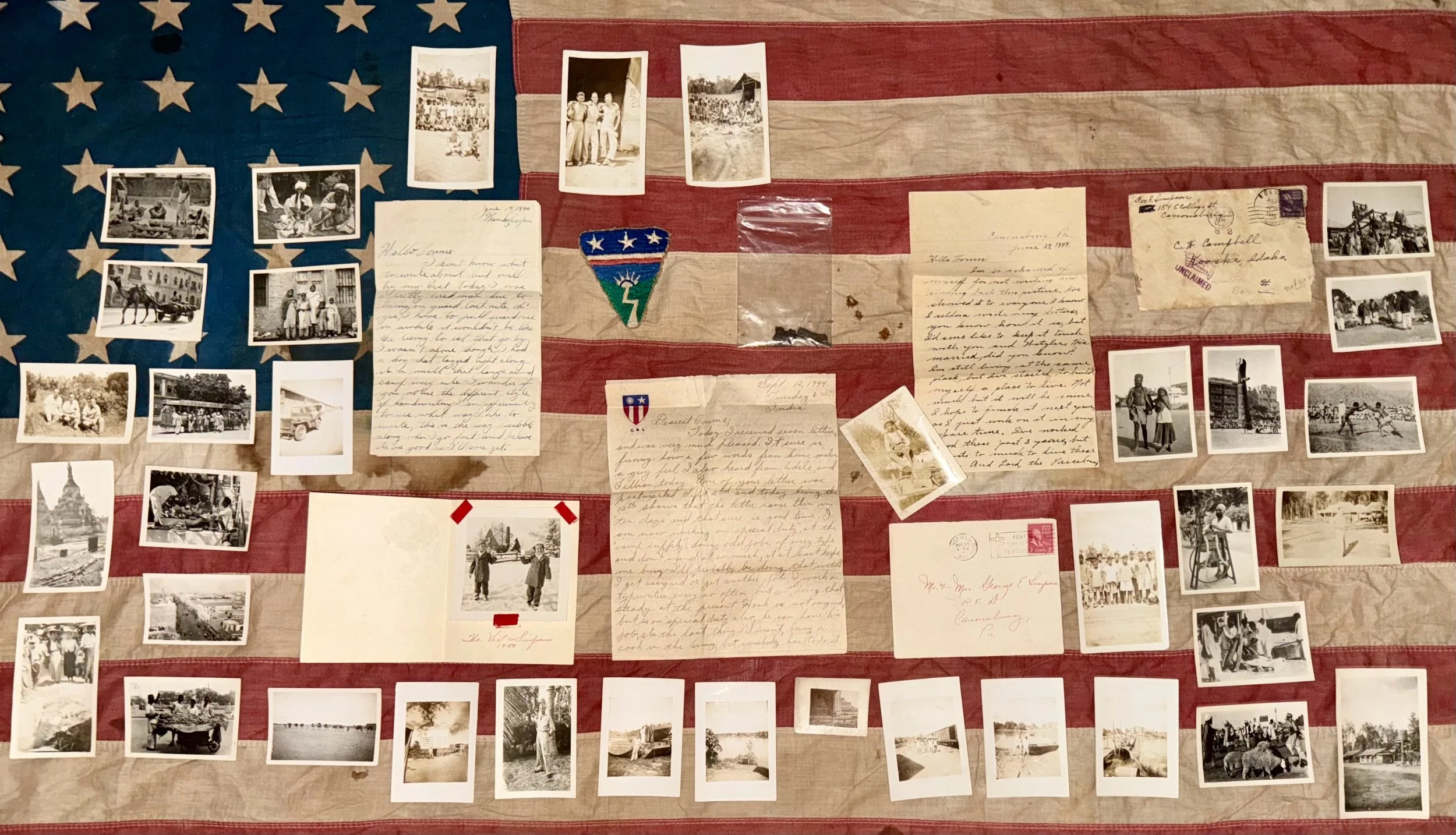
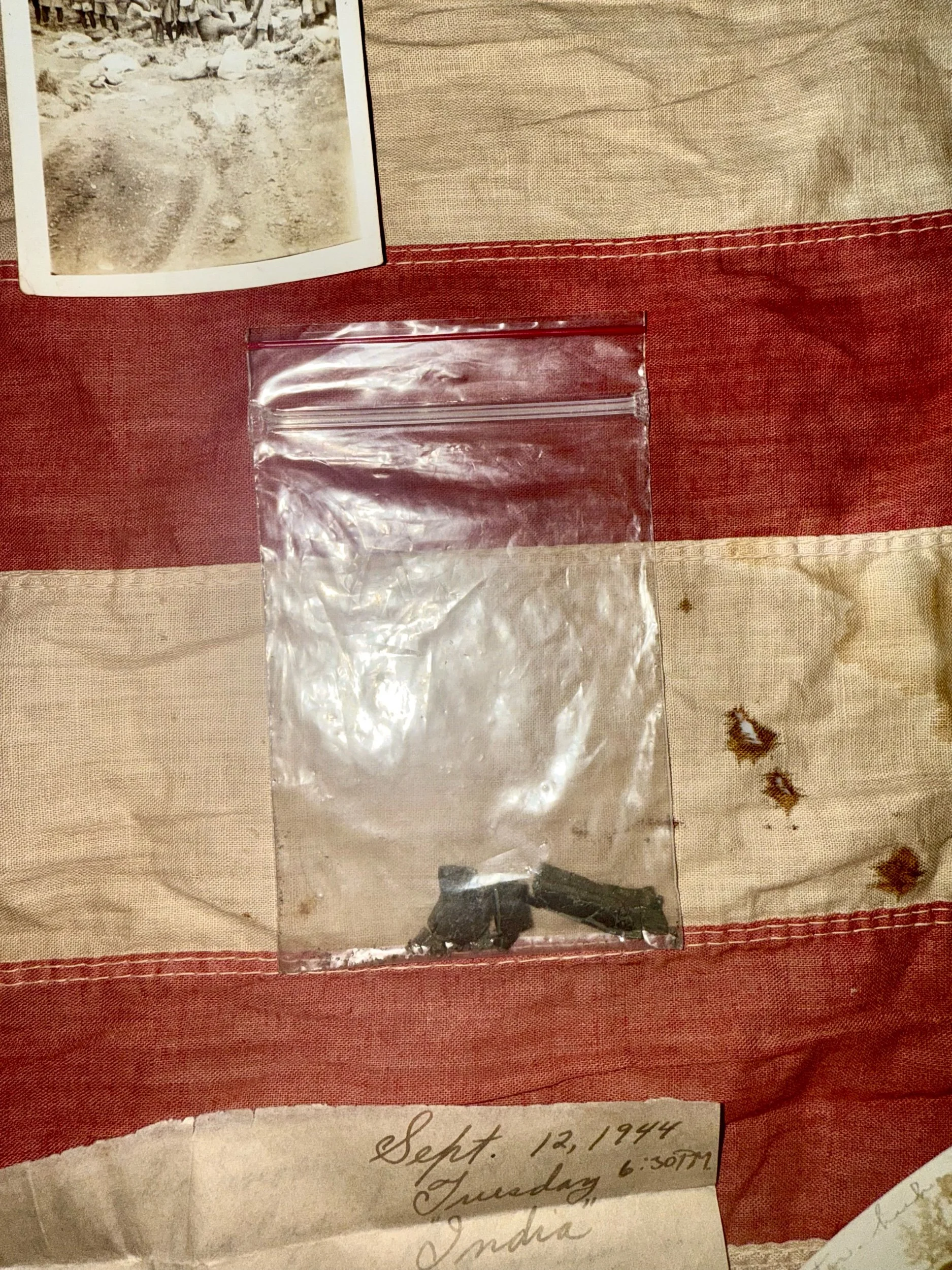
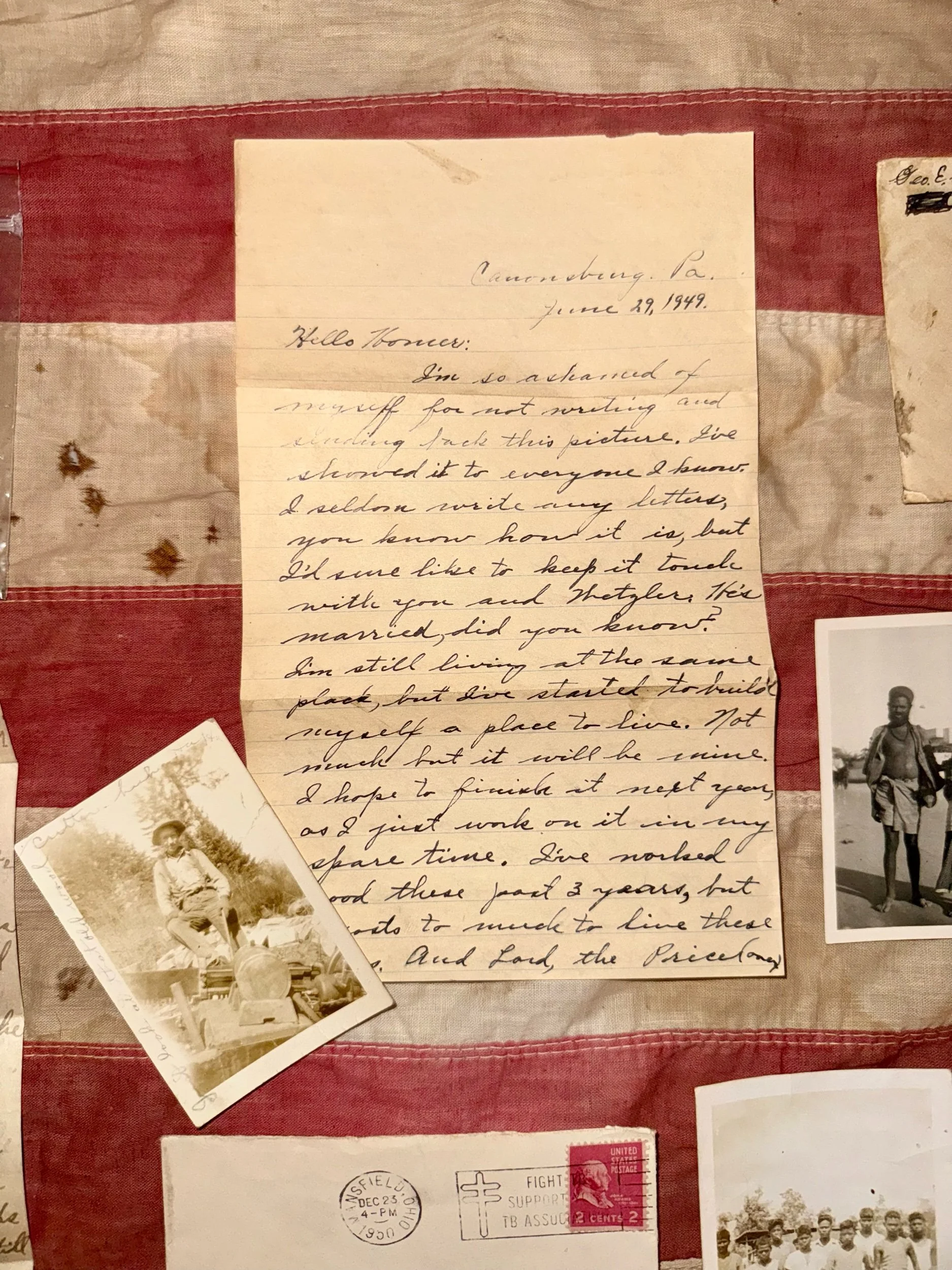
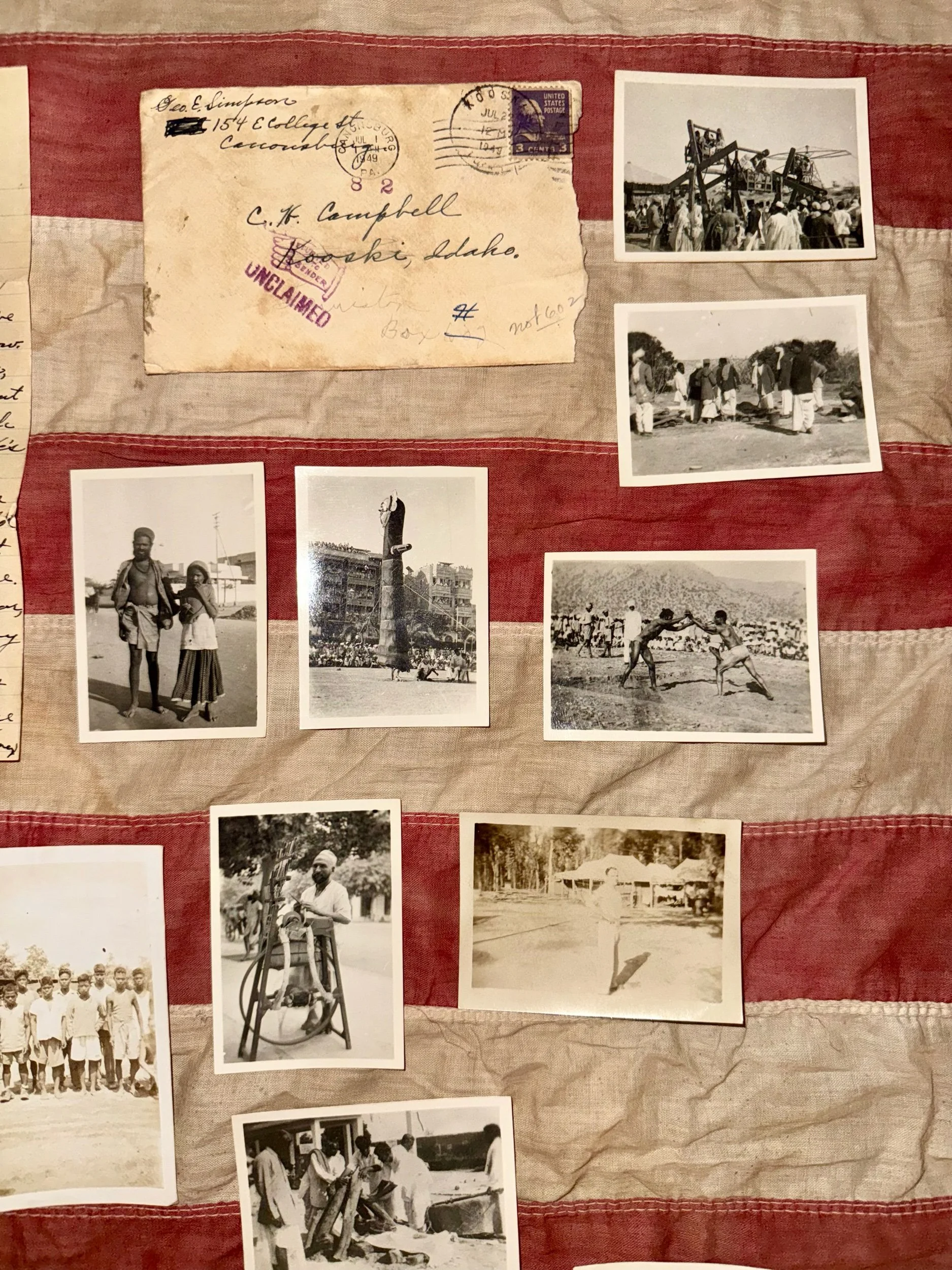
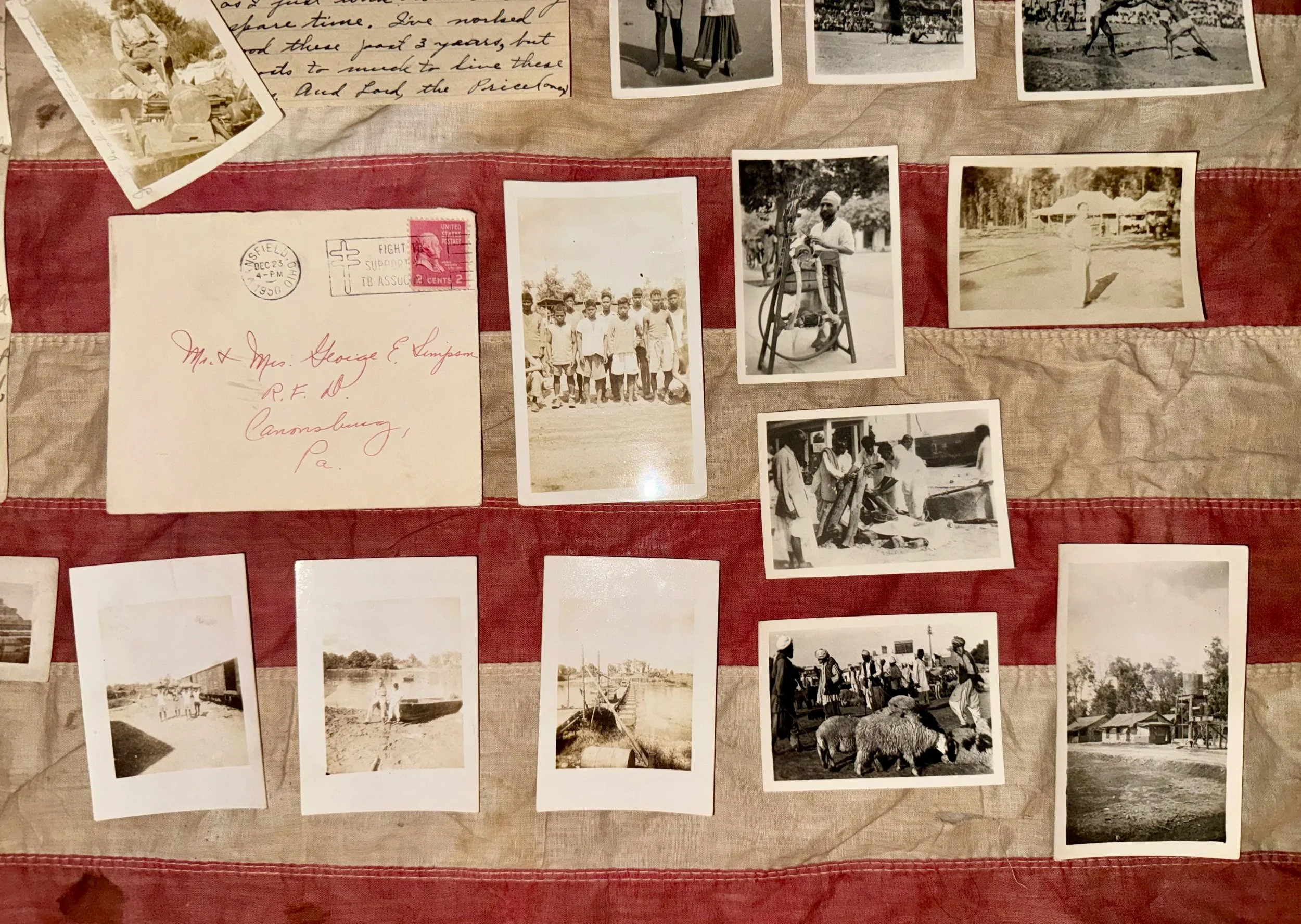
The collection consists of original wartime correspondence, personal snapshot photographs taken in India and Burma, a period CBI shoulder sleeve insignia, and official postwar documentation confirming Simpson’s military service. Together, these materials form a complete, internally consistent theater grouping tied to a single identified soldier.
Biographical Profile
Name: George E. Simpson
Born: March 10, 1917
Birthplace: Hill Station, Washington County, Pennsylvania
Residence at Enlistment: 110 N. Washington Street, Canonsburg, PA
Entered Active Service: March 1943, Pittsburgh, Pennsylvania
Foreign Service: October 29, 1944 – October 15, 1945
Theater of Operations: China–Burma–India
Discharged: October 20, 1945, Indiantown Gap, Pennsylvania
Service Number: 33738513
Died: 1988
Simpson entered service at age 26 and was deployed overseas at age 27. His foreign service dates align precisely with the letters and photographs preserved in this archive.
Historical Context
The China–Burma–India Theater was one of the most logistically demanding fronts of World War II. American forces operated across vast distances in extreme climates, supporting operations in India and Northern Burma against Japanese forces.
Mandalay, referenced in Simpson’s June 18, 1945 letter, was retaken by Allied forces in March 1945. By mid-1945, U.S. Army personnel were engaged in supply operations, infrastructure rebuilding, and stabilization efforts.
Simpson’s correspondence reflects service in camp supply and special duty assignments consistent with Services of Supply personnel, the backbone of CBI operations.
Collection Contents
1. Wartime Correspondence (1944–1945)
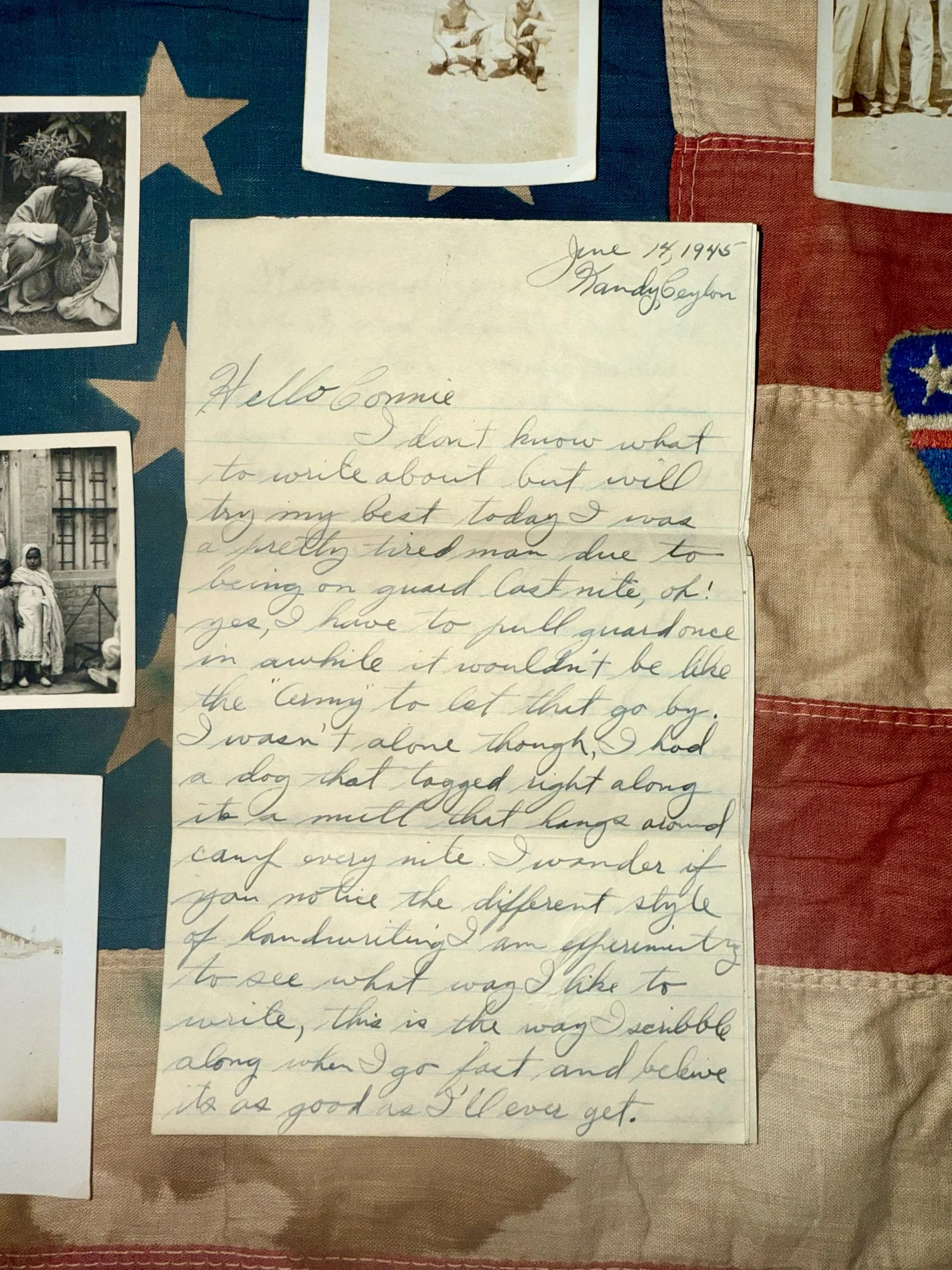
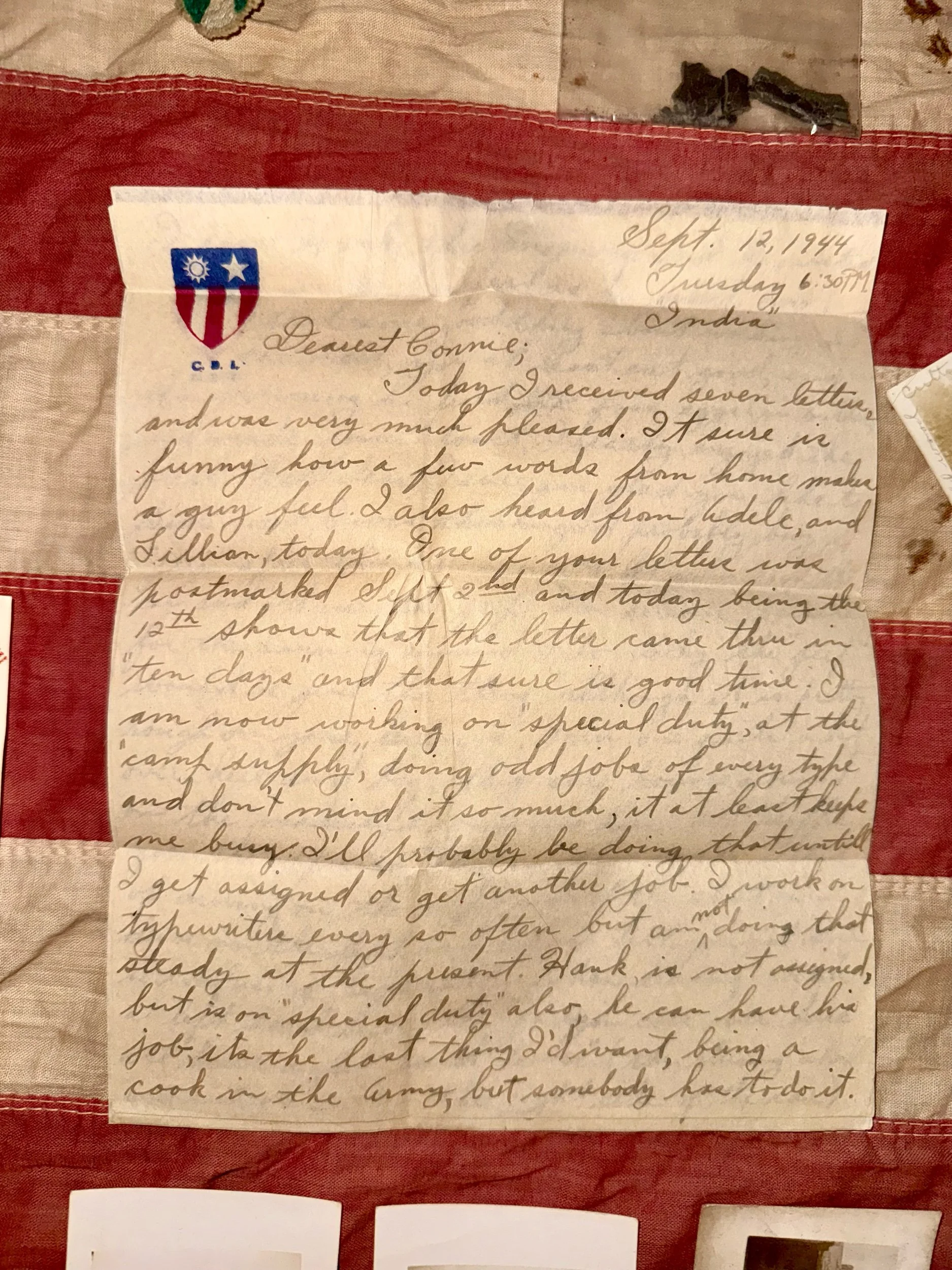
Handwritten letters sent from India and Mandalay, Burma. Dated examples include:
September 12, 1944 – India
June 18, 1945 – Mandalay
The letters describe:
Guard duty
Camp supply assignments
Administrative and typewriter work
Daily life in theater
Mail transit times and morale
The tone is reflective and personal, providing insight into the lived experience of a support soldier operating far from home.
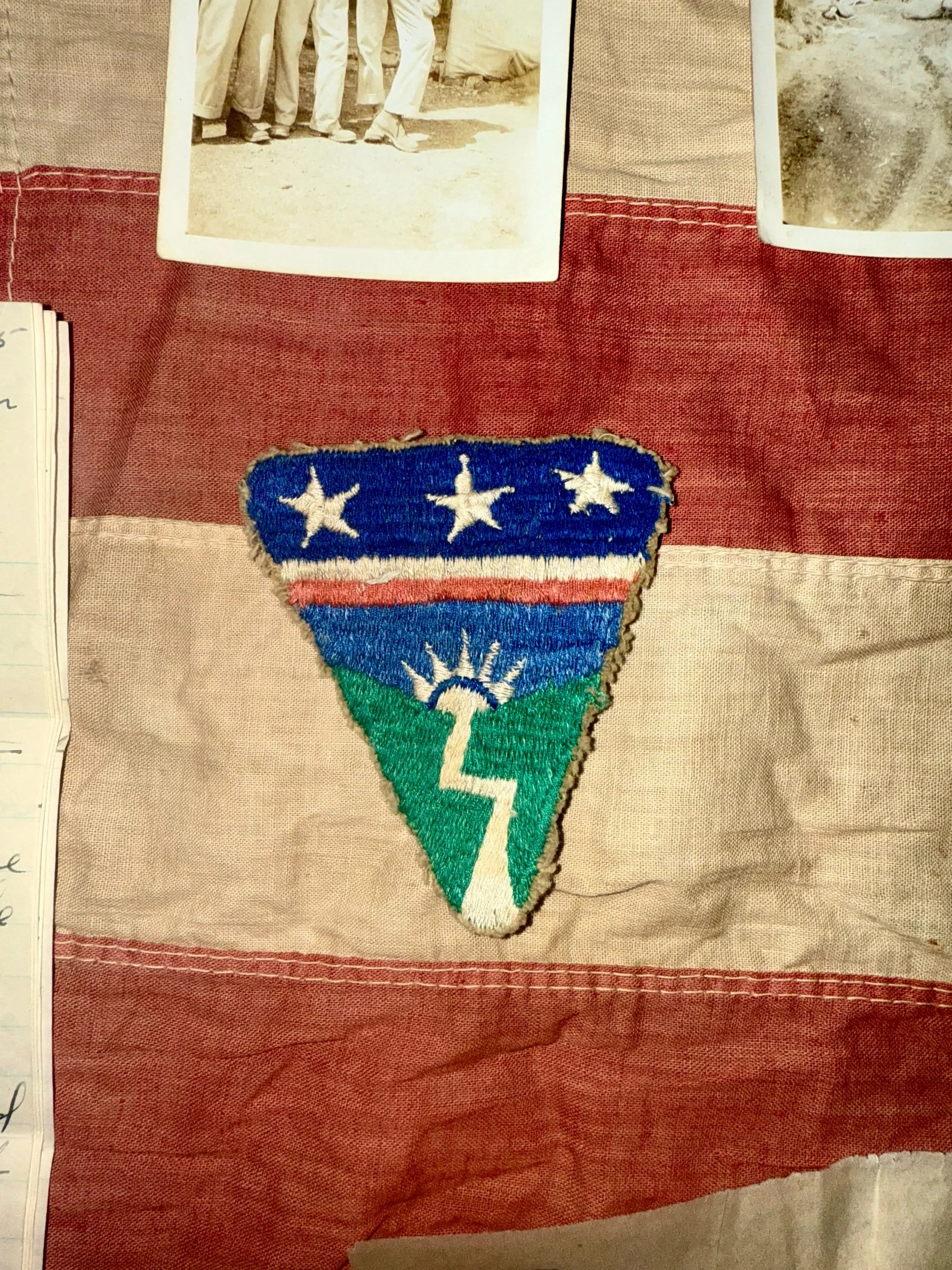
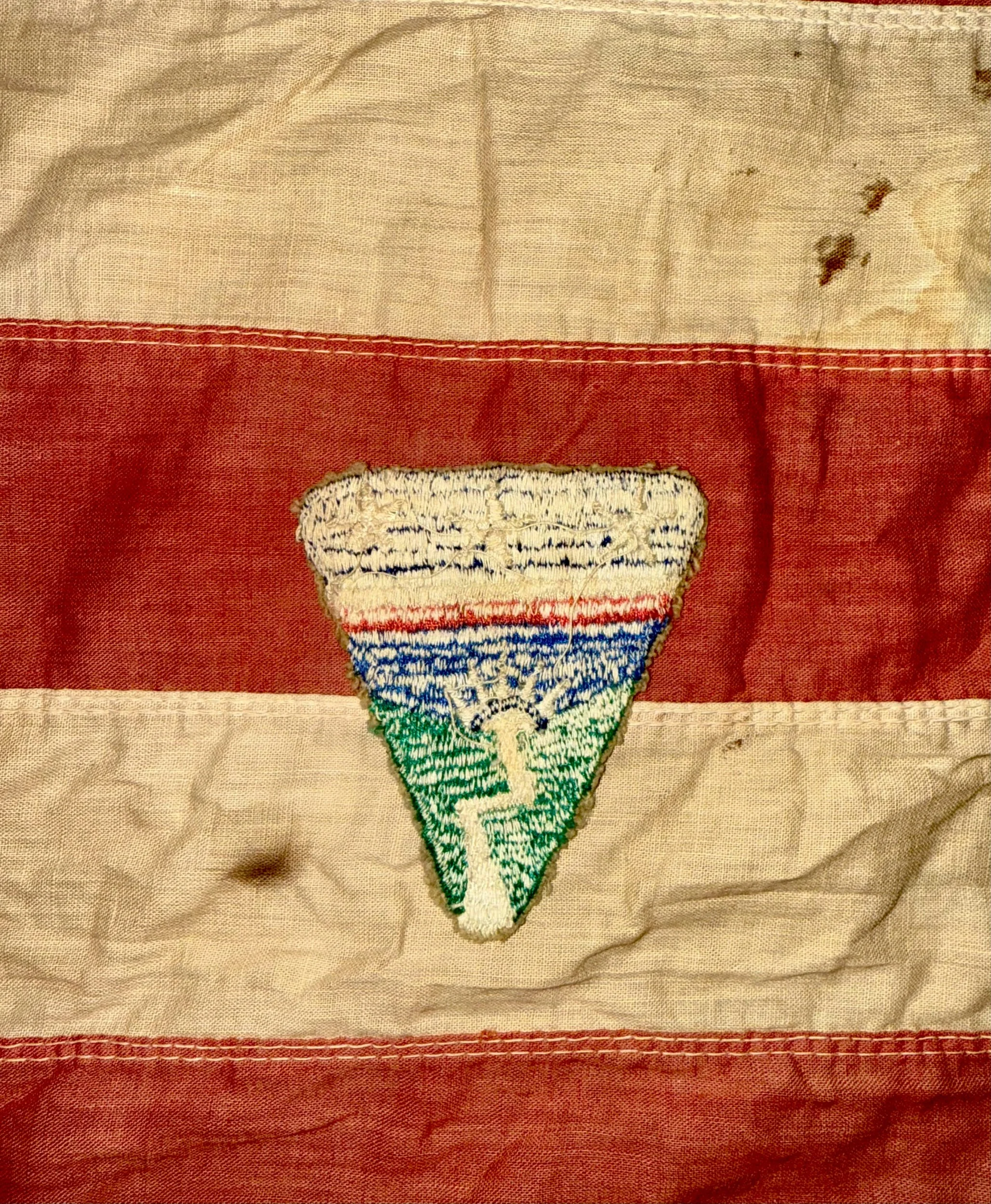
2. China–Burma–India Theater Shoulder Sleeve Insignia
Original triangular SSI featuring:
Blue upper field with three white stars
Red horizontal stripe
Green lower section
White lightning bolt and sunburst motif
This insignia represents the U.S. Army Services of Supply in the CBI Theater and is consistent with Simpson’s documented overseas assignment.
3. Personal Snapshot Photographs
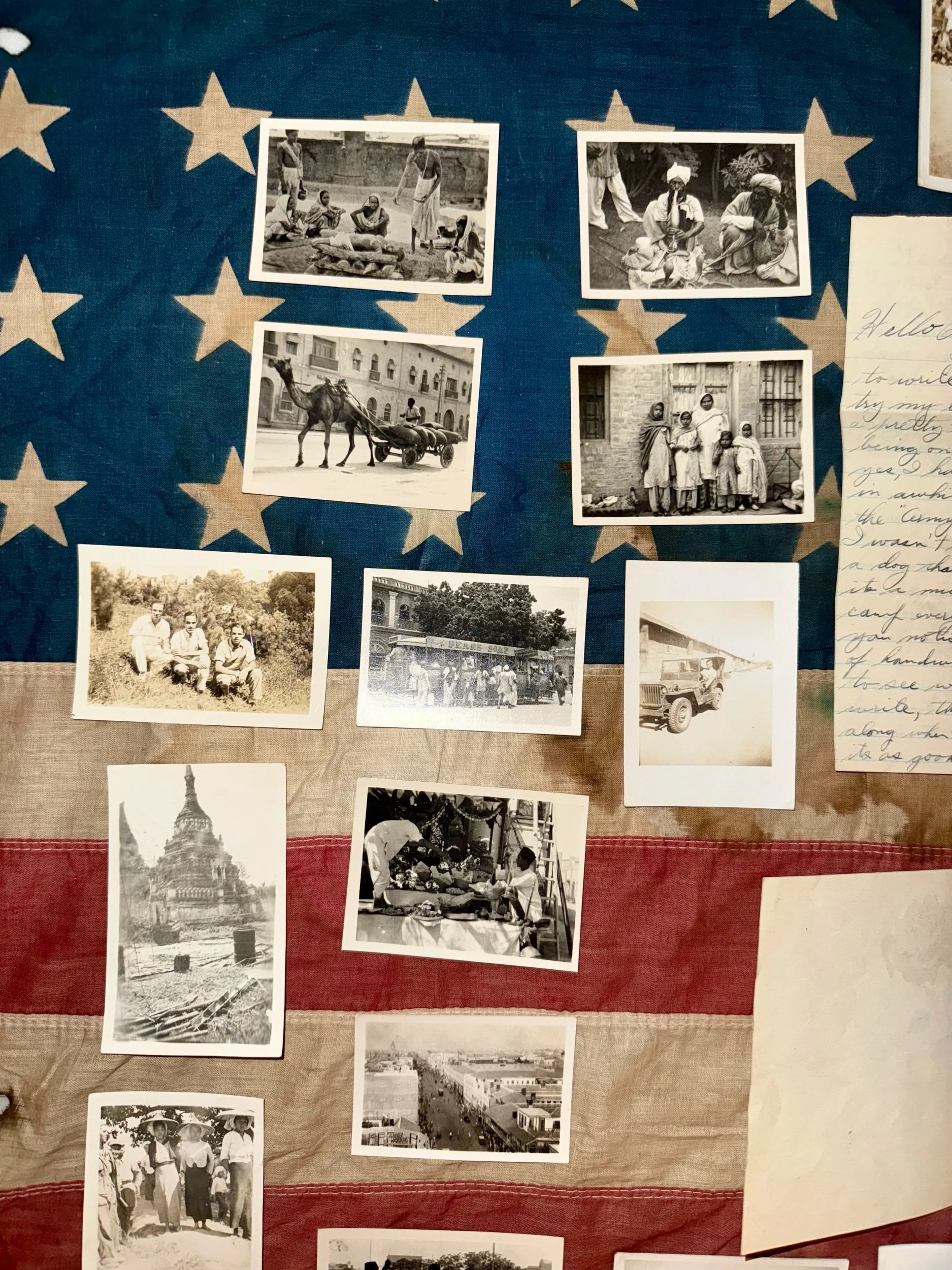
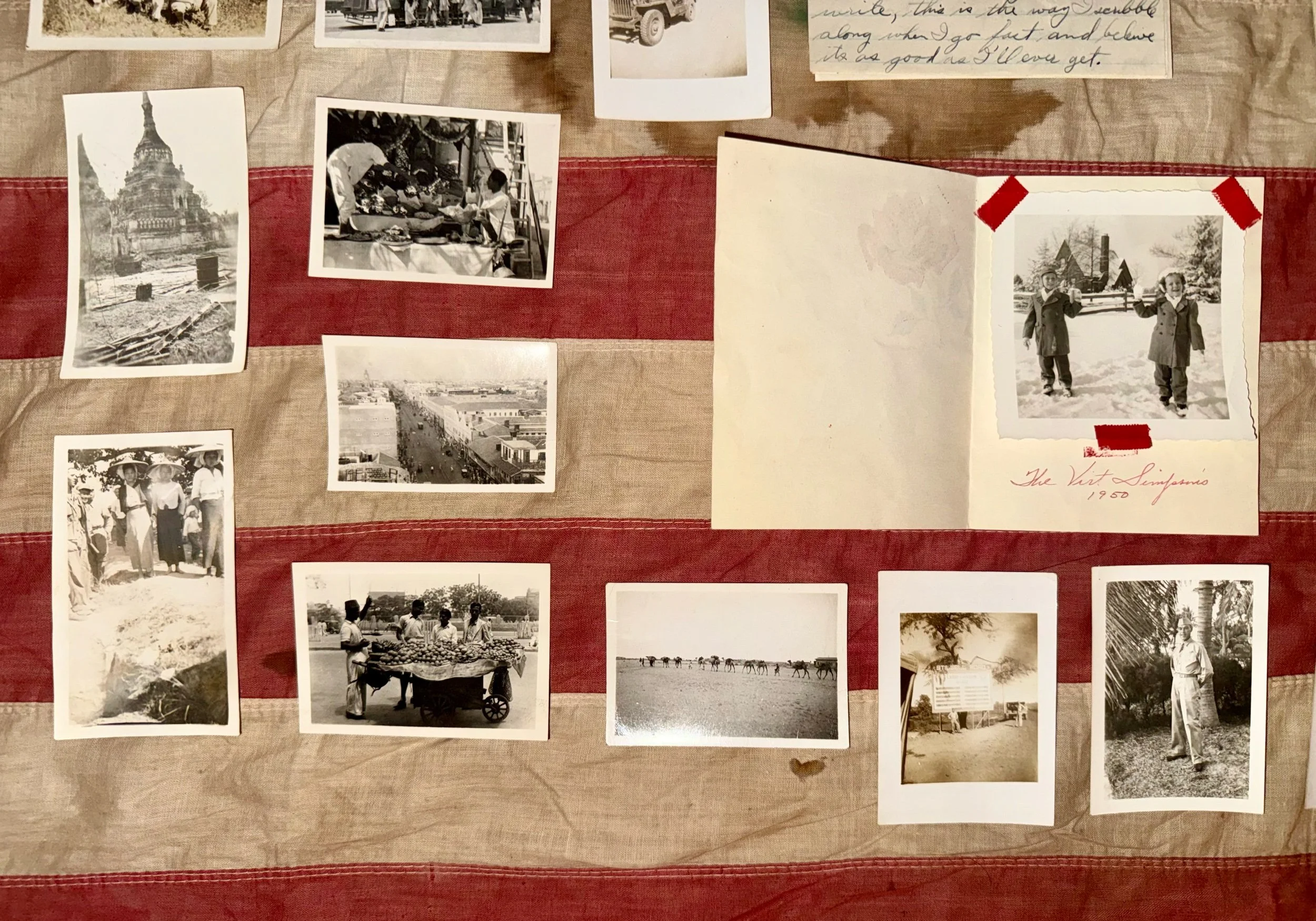
A series of original black-and-white photographs depicting:
Indian markets and vendors
Camel carts and livestock scenes
Local children and tradesmen
Wrestling matches and village life
Military trucks and camp scenes
Pagoda and temple architecture
Urban and rural street views
These images reflect the perspective of an American serviceman encountering the cultural landscape of wartime India and Burma. They are personal snapshots rather than official press images, increasing their interpretive value as firsthand documentation.
Significance
This archive represents:
A fully identified WWII soldier
Verified China–Burma–India Theater service
Primary source correspondence
Theater-correct insignia
Personal photographic documentation
The CBI Theater remains one of the lesser-collected and lesser-documented American WWII fronts. Cohesive, named groupings from this theater are comparatively scarce.
This collection preserves the wartime record of a Pennsylvania serviceman whose role—while not front-line combat—was essential to sustaining Allied operations in one of the most logistically complex theaters of the war.
Free Shipping
Collection Overview
This documented and cohesive World War II archive represents the overseas service of George E. Simpson (March 10, 1917 – 1988), a United States Army serviceman from Canonsburg, Washington County, Pennsylvania, who served in the China–Burma–India (CBI) Theater from late 1944 through October 1945.
The collection consists of original wartime correspondence, personal snapshot photographs taken in India and Burma, a period CBI shoulder sleeve insignia, and official postwar documentation confirming Simpson’s military service. Together, these materials form a complete, internally consistent theater grouping tied to a single identified soldier.
Biographical Profile
Name: George E. Simpson
Born: March 10, 1917
Birthplace: Hill Station, Washington County, Pennsylvania
Residence at Enlistment: 110 N. Washington Street, Canonsburg, PA
Entered Active Service: March 1943, Pittsburgh, Pennsylvania
Foreign Service: October 29, 1944 – October 15, 1945
Theater of Operations: China–Burma–India
Discharged: October 20, 1945, Indiantown Gap, Pennsylvania
Service Number: 33738513
Died: 1988
Simpson entered service at age 26 and was deployed overseas at age 27. His foreign service dates align precisely with the letters and photographs preserved in this archive.
Historical Context
The China–Burma–India Theater was one of the most logistically demanding fronts of World War II. American forces operated across vast distances in extreme climates, supporting operations in India and Northern Burma against Japanese forces.
Mandalay, referenced in Simpson’s June 18, 1945 letter, was retaken by Allied forces in March 1945. By mid-1945, U.S. Army personnel were engaged in supply operations, infrastructure rebuilding, and stabilization efforts.
Simpson’s correspondence reflects service in camp supply and special duty assignments consistent with Services of Supply personnel, the backbone of CBI operations.
Collection Contents
1. Wartime Correspondence (1944–1945)
Handwritten letters sent from India and Mandalay, Burma. Dated examples include:
September 12, 1944 – India
June 18, 1945 – Mandalay
The letters describe:
Guard duty
Camp supply assignments
Administrative and typewriter work
Daily life in theater
Mail transit times and morale
The tone is reflective and personal, providing insight into the lived experience of a support soldier operating far from home.
2. China–Burma–India Theater Shoulder Sleeve Insignia
Original triangular SSI featuring:
Blue upper field with three white stars
Red horizontal stripe
Green lower section
White lightning bolt and sunburst motif
This insignia represents the U.S. Army Services of Supply in the CBI Theater and is consistent with Simpson’s documented overseas assignment.
3. Personal Snapshot Photographs
A series of original black-and-white photographs depicting:
Indian markets and vendors
Camel carts and livestock scenes
Local children and tradesmen
Wrestling matches and village life
Military trucks and camp scenes
Pagoda and temple architecture
Urban and rural street views
These images reflect the perspective of an American serviceman encountering the cultural landscape of wartime India and Burma. They are personal snapshots rather than official press images, increasing their interpretive value as firsthand documentation.
Significance
This archive represents:
A fully identified WWII soldier
Verified China–Burma–India Theater service
Primary source correspondence
Theater-correct insignia
Personal photographic documentation
The CBI Theater remains one of the lesser-collected and lesser-documented American WWII fronts. Cohesive, named groupings from this theater are comparatively scarce.
This collection preserves the wartime record of a Pennsylvania serviceman whose role—while not front-line combat—was essential to sustaining Allied operations in one of the most logistically complex theaters of the war.
Free Shipping