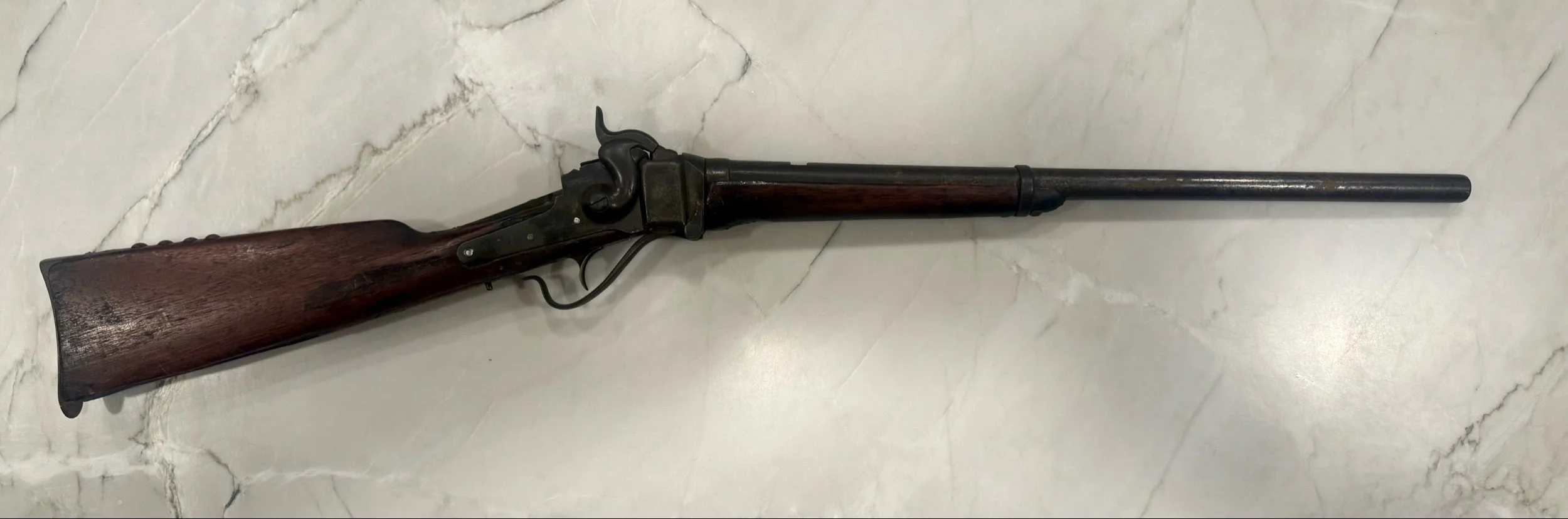
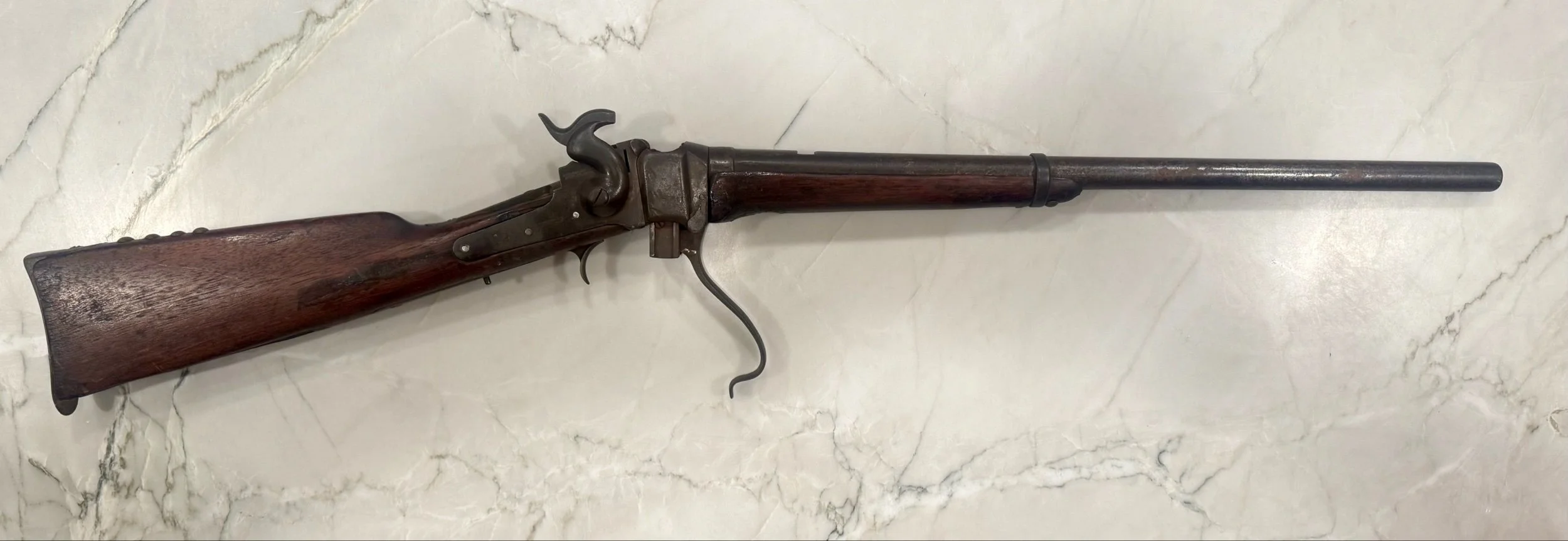
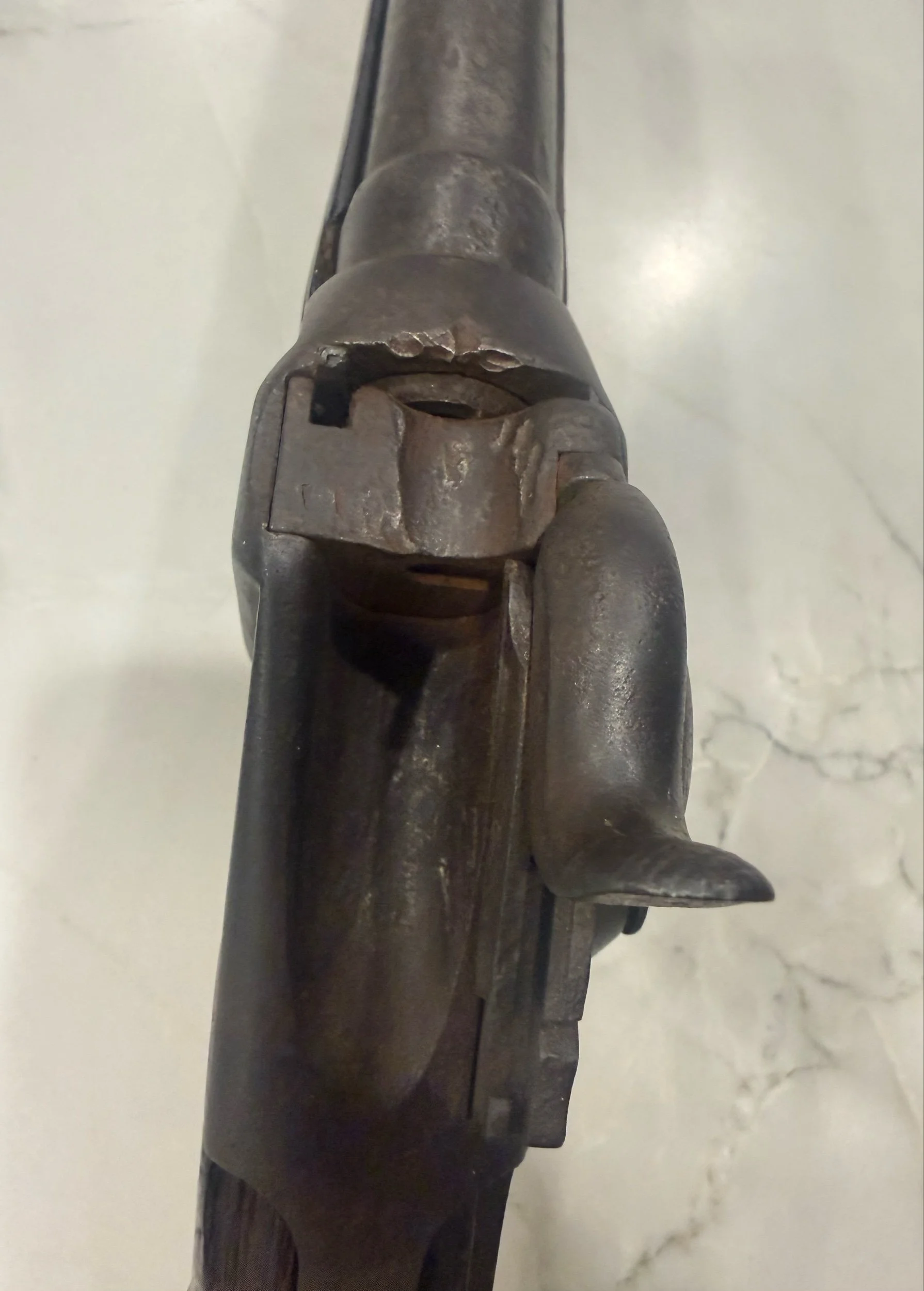
Original Civil War-era Sharps carbine subsequently converted to .50-70 Government centerfire for continued service during the Indian Wars.
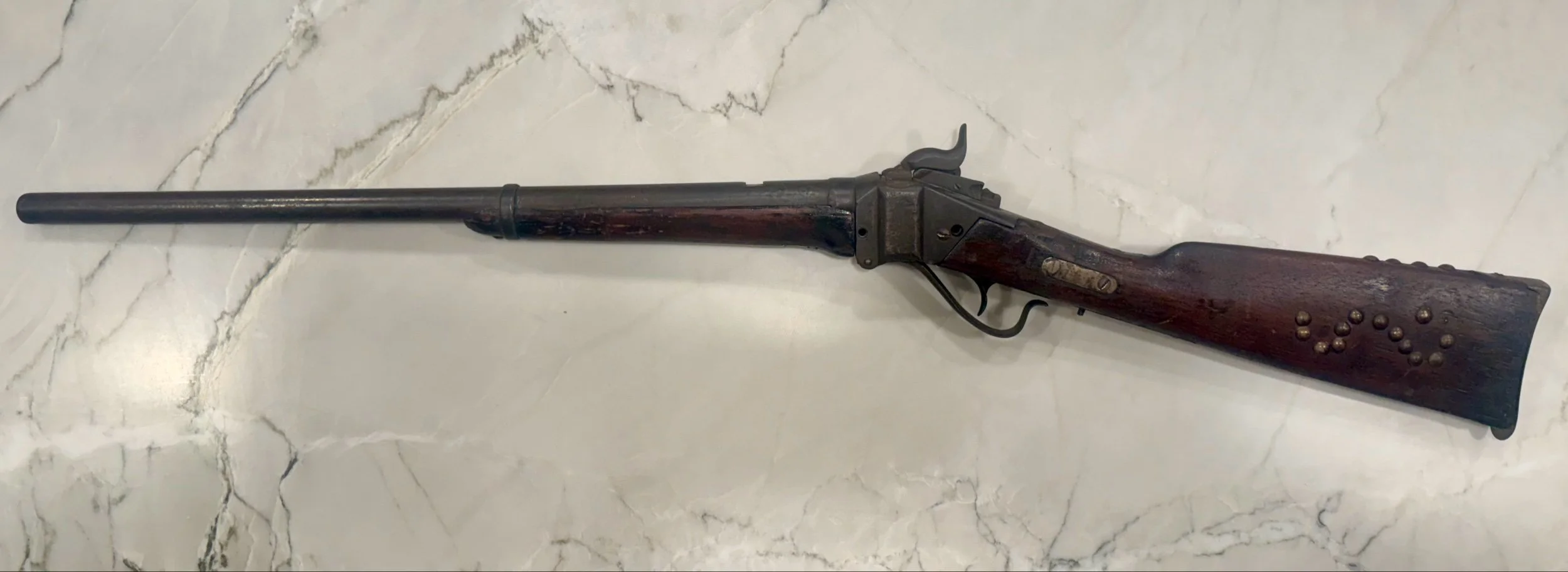
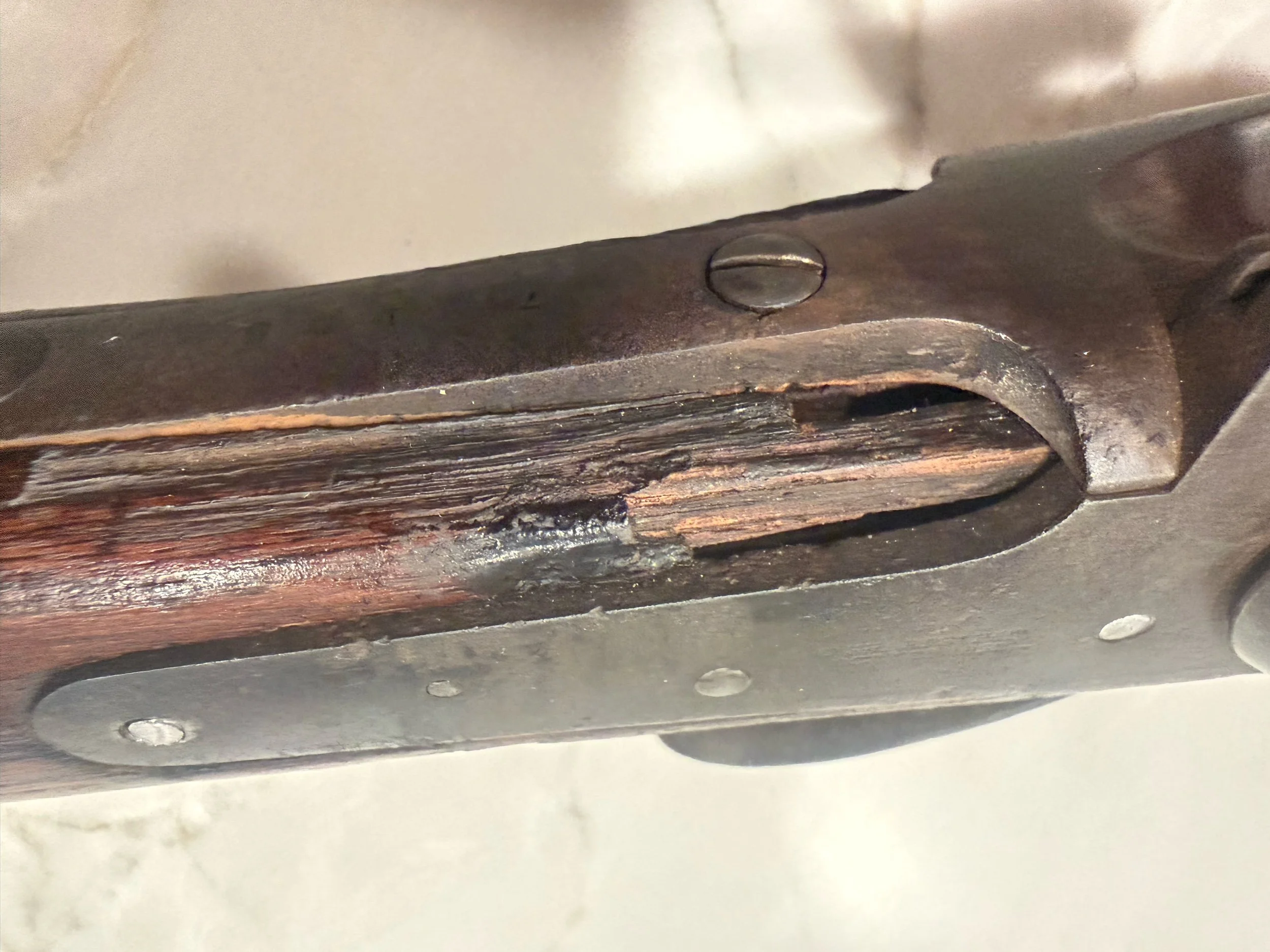
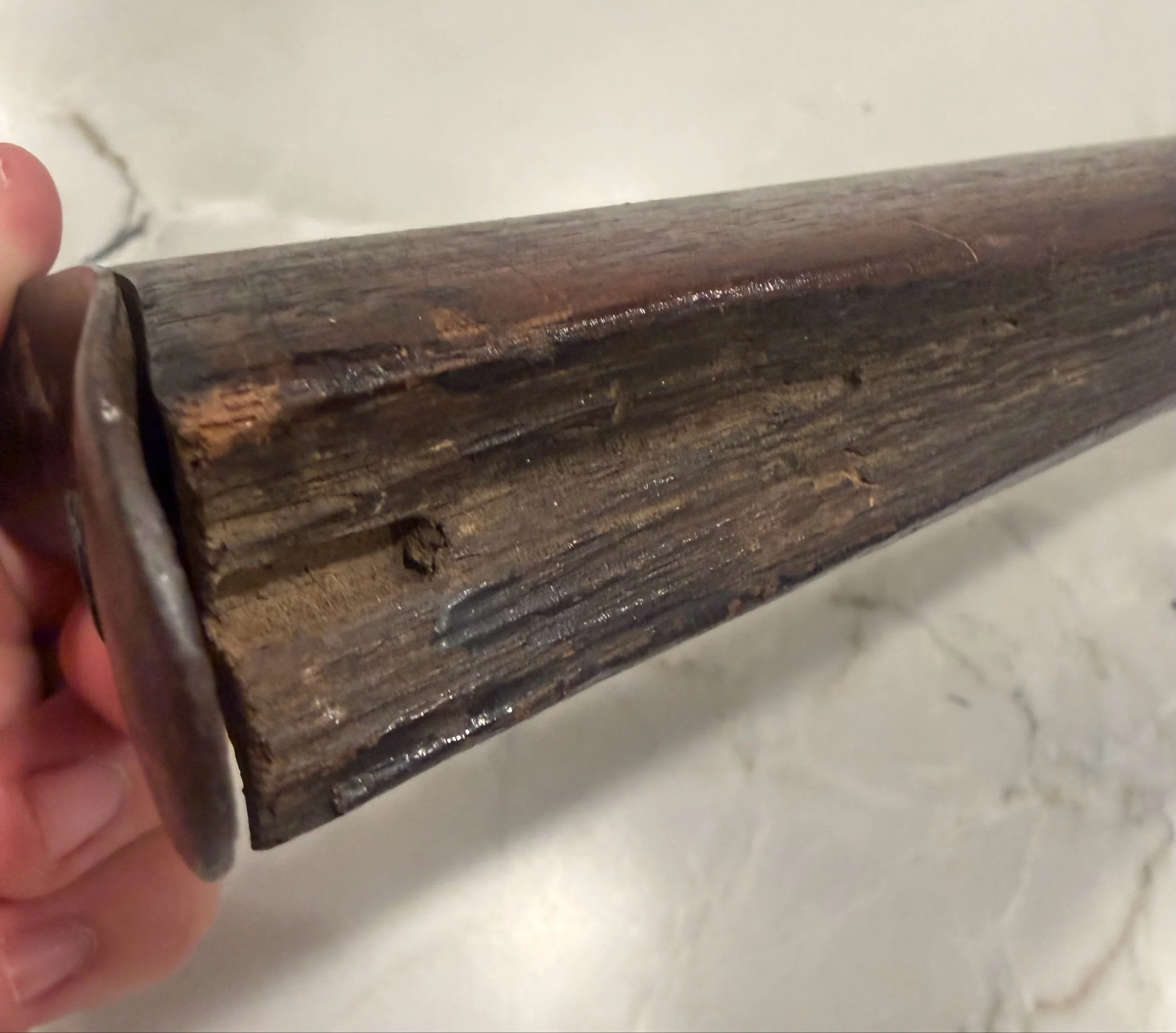
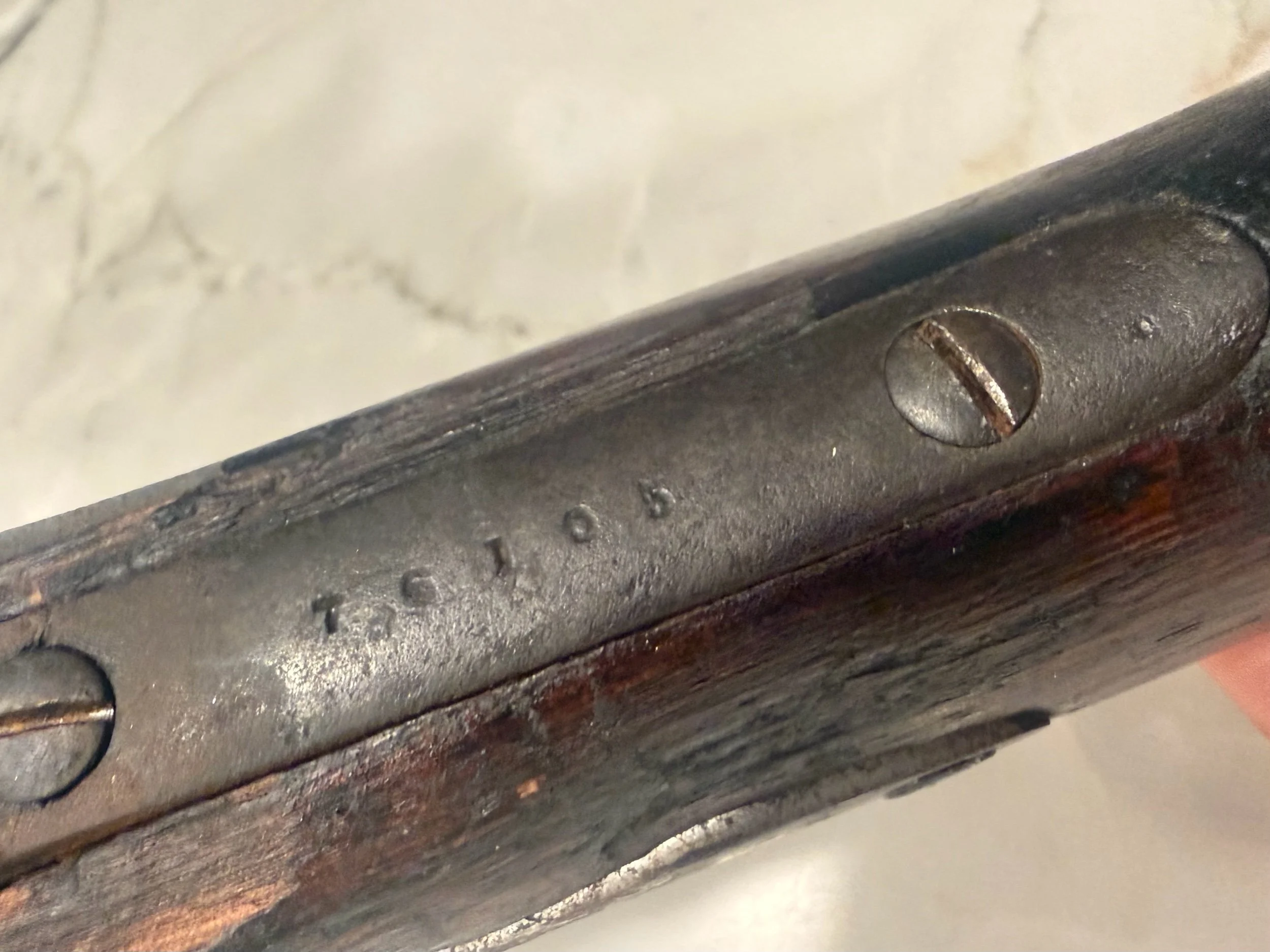
This carbine has an exceptionally rugged, battle-worn appearance, displaying numerous scars, gouges, dents, and areas of heavy wear throughout the walnut stock and forearm. The wood exhibits substantial damage accumulated over its long life, including deep abrasions, battered edges, and areas of material loss. The metal surfaces retain a dark, aged patina with considerable wear.
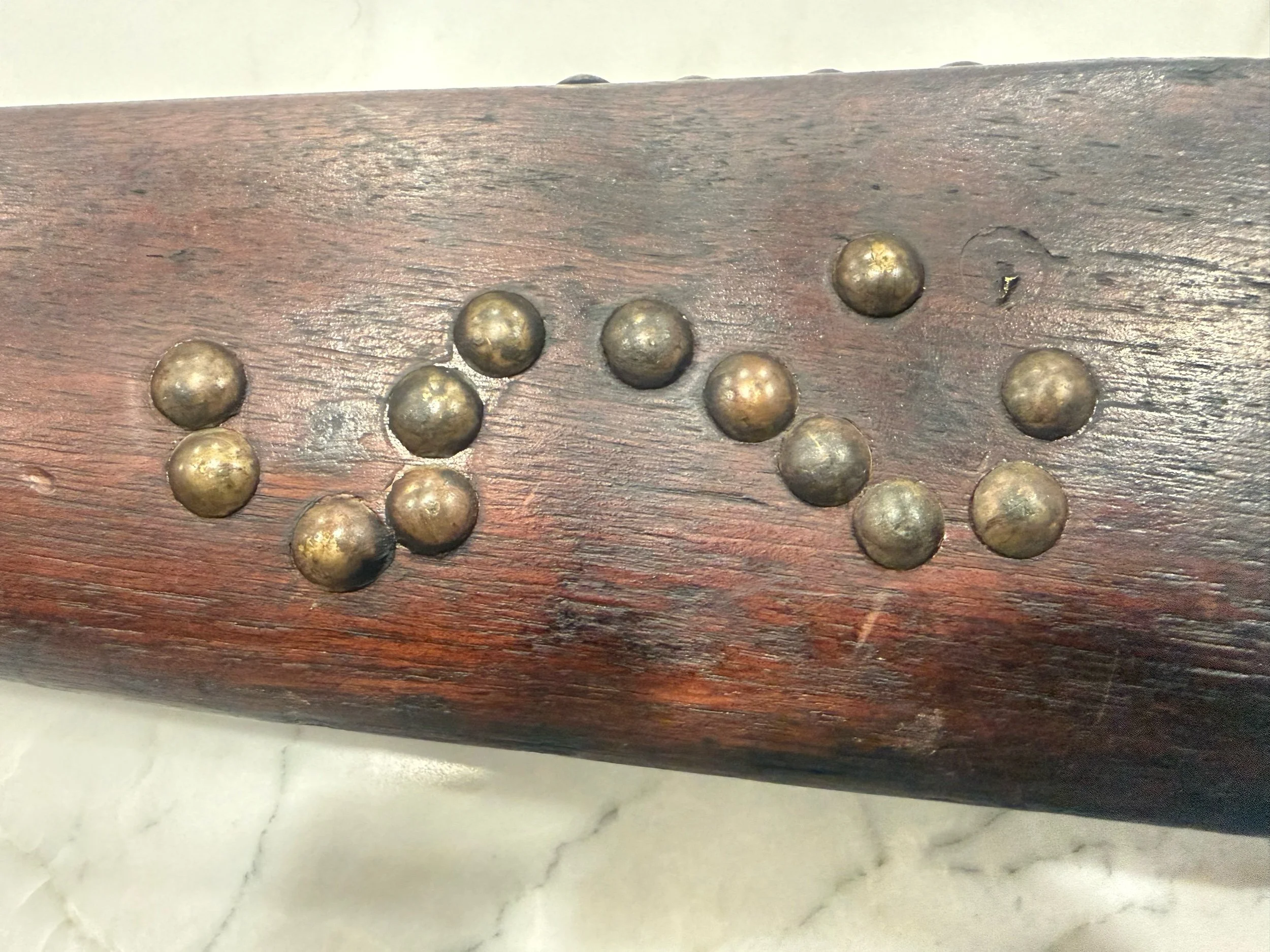
Of particular interest is the unusual arrangement of brass tacks decorating the buttstock. These geometric patterns are reminiscent of Native American-decorated firearms of the frontier era, raising the possibility that this Sharps passed into Native American hands during the Indian Wars.
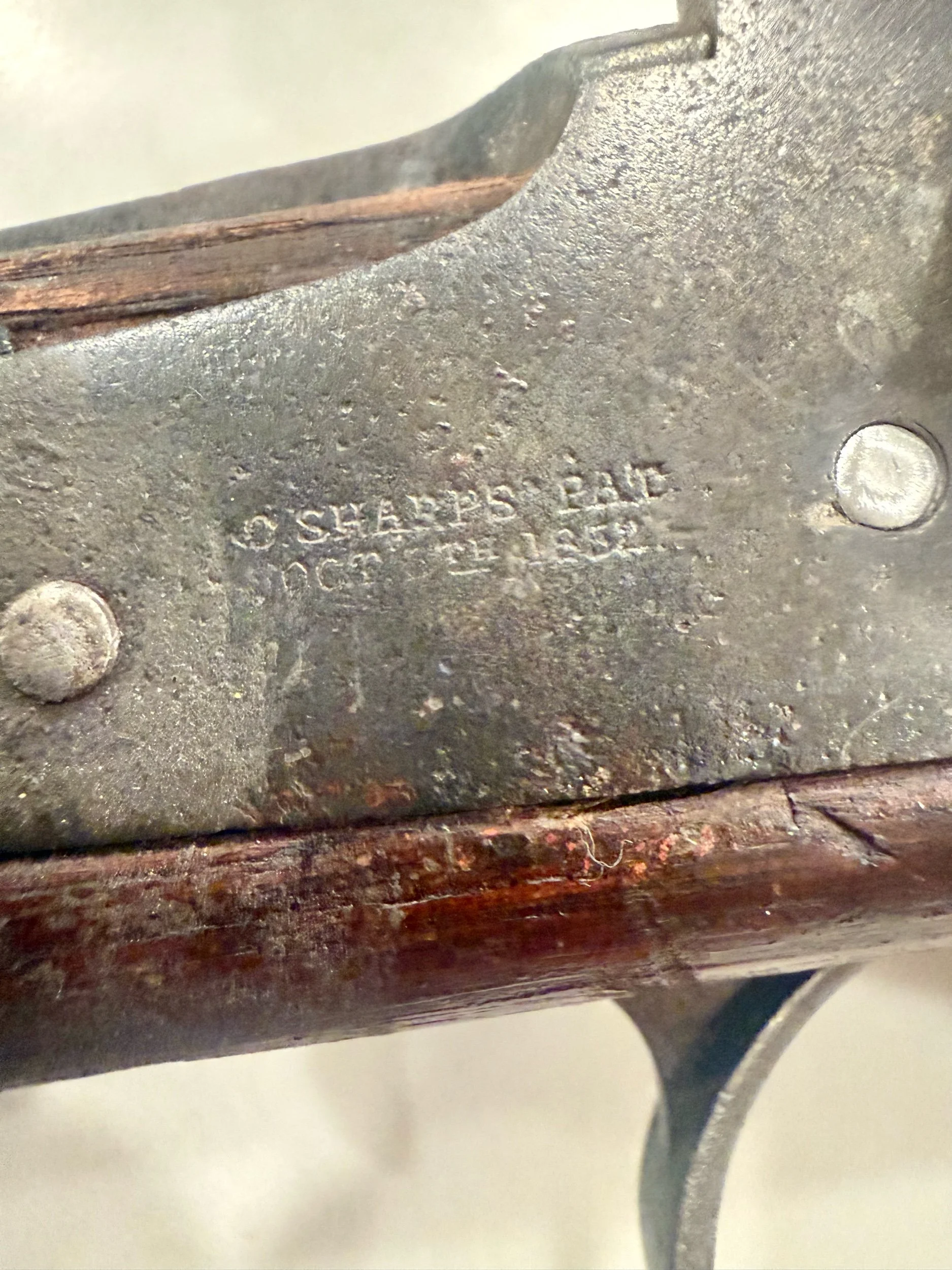
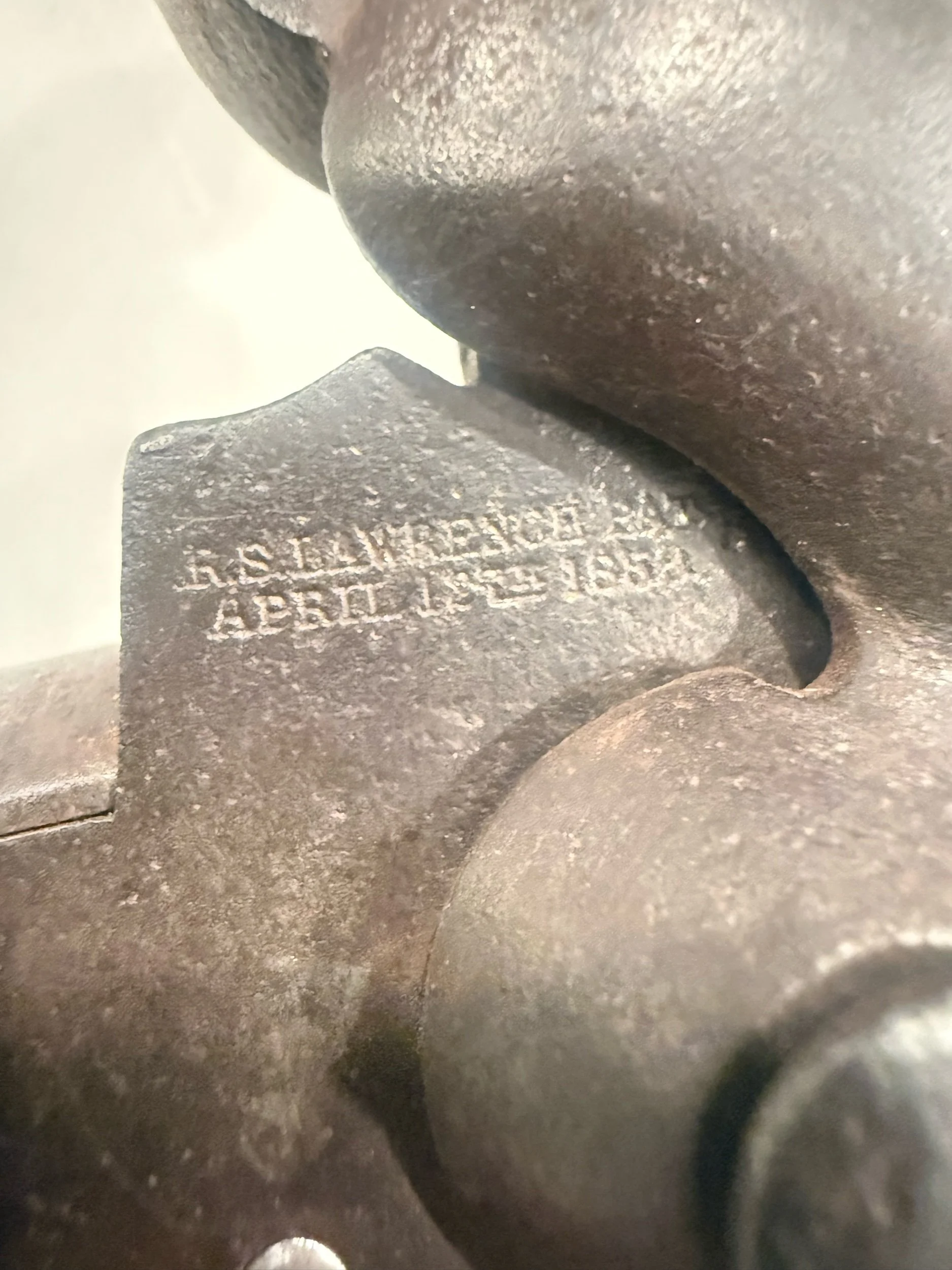
The carbine retains its Sharps and Lawrence patent markings. The hammer functions properly in both half-cock and full-cock positions.
This is certainly not a pristine collector’s example. Instead, it is a heavily worn frontier survivor with tremendous historical character. Its battered appearance, numerous scars, and distinctive tack decoration make it an especially interesting piece of American frontier history.
An evocative Civil War and Indian Wars-era firearm that displays the unmistakable signs of a long and difficult working life.