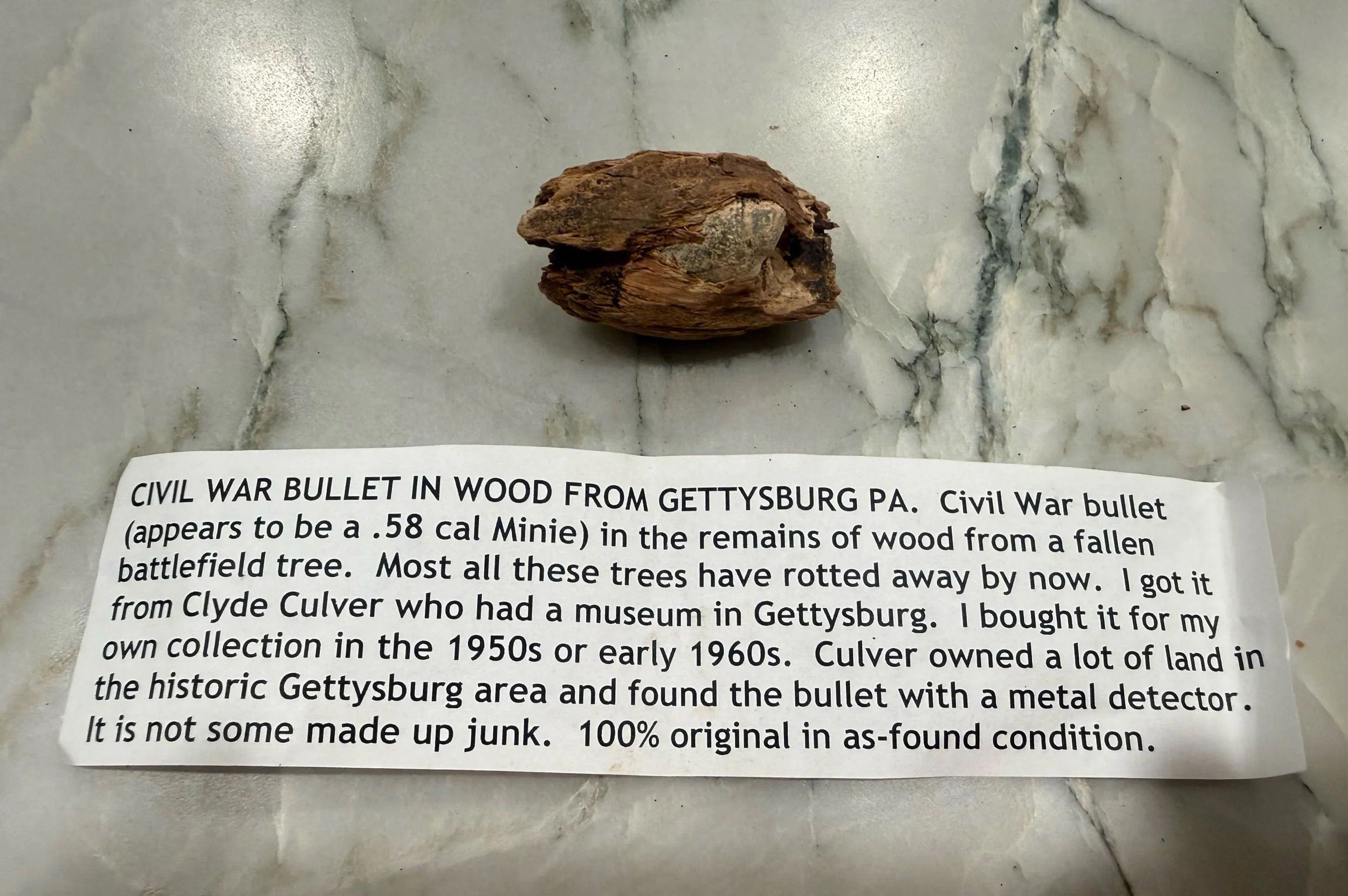
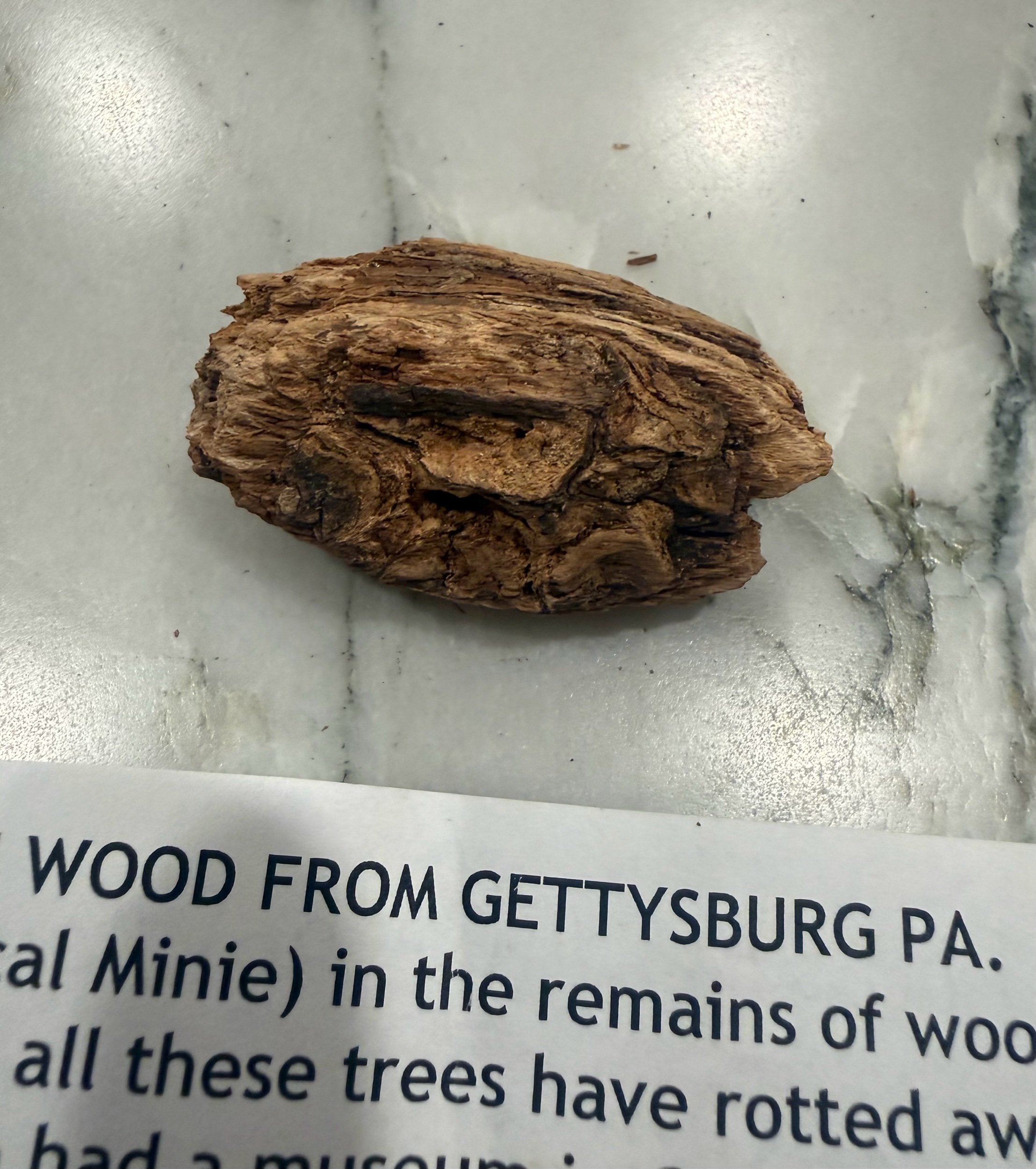
Offered is an outstanding Civil War bullet embedded in original battlefield wood, reportedly recovered from the historic Gettysburg, Pennsylvania, battlefield area.
This remarkable relic features what appears to be a .58 caliber Minié ball lodged within a fragment of aged wood, believed to have originated from a tree struck by gunfire during the Battle of Gettysburg, July 1–3, 1863.
What makes this example especially interesting is its accompanying early collector’s provenance.
According to the original identification note, the relic was obtained from Clyde Culver, who reportedly operated a museum in Gettysburg and owned considerable property in the historic Gettysburg area. Culver is credited in the note with discovering the bullet using a metal detector.
The previous collector states that he acquired the relic directly from Culver during the 1950s or early 1960s, preserving it in his personal collection for decades.
The wood displays pronounced grain, age-related cracking, and natural deterioration, while the exposed lead projectile remains embedded in its original position. The piece has not been removed from the wood or reconstructed.
During the Battle of Gettysburg, thousands of musket rounds struck trees, fences, buildings, and other obstacles across the battlefield. Surviving bullets embedded in period wood offer a fascinating physical reminder of the tremendous volume of small-arms fire exchanged during the engagement.
Condition: Original aged relic condition. The wood exhibits drying, splitting, and surface deterioration, while the exposed projectile retains an oxidized lead surface. The bullet remains embedded in the wood. Includes the accompanying collector’s identification and provenance note.
An exceptional Gettysburg-associated battlefield relic with documented early collection history, ideal for collectors of Civil War ammunition, Gettysburg artifacts, and bullets in wood.
Shipping included to the lower 48 contiguous United States.